Man accused of planting pipe bombs before Jan. 6 Capitol attack is
charged with explosives offenses
[December 05, 2025]
By ERIC TUCKER and ALANNA DURKIN RICHER
WASHINGTON (AP) — The FBI on Thursday arrested a man accused of placing
two pipe bombs outside the headquarters of the Republican and Democratic
national parties in Washington on the eve of the U.S. Capitol attack, an
abrupt breakthrough in an investigation that for years flummoxed law
enforcement and spawned conspiracy theories about Jan. 6, 2021.
The arrest marks the first time investigators have publicly identified a
suspect in an act that has been an enduring mystery for nearly five
years in the shadow of the violent Capitol insurrection.
The suspect was identified as Brian J. Cole Jr., 30, of Woodbridge,
Virginia, but key questions remain unanswered after his arrest on
explosives charges, including a possible motive and what connection if
any the act had to the assault on the Capitol the following day by
supporters of President Donald Trump.
Law enforcement officials reviewed credit card purchases of pipe bomb
components, cellphone tower data and a license plate reader to zero in
on Cole, according to an FBI affidavit filed in the case. The FBI and
Justice Department declined to elaborate on what led them to the
suspect, but characterized his arrest as the result of a reinvigorated
investigation during the Trump administration and credited a fresh
analysis of already-collected evidence and data.
“Let me be clear: There was no new tip. There was no new witness. Just
good, diligent police work and prosecutorial work,” Attorney General Pam
Bondi said at a news conference.

Calls to relatives of Cole listed in public records were not immediately
returned Thursday. Hours after Cole was taken into custody, unmarked law
enforcement vehicles lined the cul-de-sac where Cole’s home is while FBI
agents helped shoo away onlookers. Authorities were seen entering the
house and examining the trunk of a car nearby.
FBI says the bombs could have killed people
The pipe bombs were placed on the evening of Jan. 5, 2021, near the
offices of the Democratic and Republican national committees. Nobody was
hurt before the bombs were rendered safe, but the FBI has said both
devices could have been lethal.
In the years since, investigators have sought the public’s help in
identifying a shadowy subject seen on surveillance camera even as they
struggled to determine answers to basic questions, including the
person’s gender and motive and whether the act had a clear connection to
the riot at the Capitol a day later, when supporters of Trump stormed
the building in a bid to halt the certification of the Republican's 2020
election loss to Democrat Joe Biden.
Seeking a breakthrough, the FBI last January publicized additional
information about the investigation, including an estimate that the
suspect was about 5 feet, 7 inches tall, as well as previously
unreleased video of the suspect placing one of the bombs.
The bureau had for years struggled to pinpoint a suspect despite
hundreds of tips, a review of tens of thousands of video files and a
significant number of interviews.
Lack of evidence spawns conspiracy theories
In the absence of harder evidence, Republican lawmakers and right-wing
media outlets promoted conspiracy theories about the pipe bombs. House
Republicans also criticized security lapses, questioning how law
enforcement failed to detect the bombs for 17 hours.
One particularly vocal commentator was Dan Bongino, the current FBI
deputy director who, before being tapped for the job this year, was a
popular conservative podcaster. He floated the possibility last year
that the act was an “inside job” and that the truth was being shielded
behind a “massive cover-up.”
[to top of second column]
|
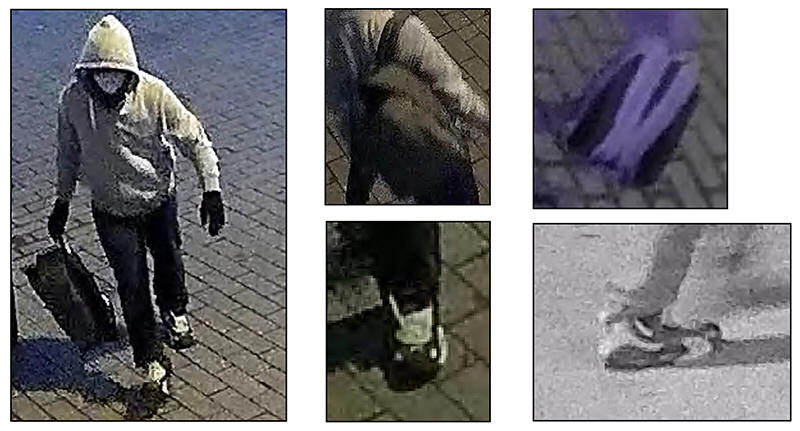
Images from an FBI poster seeking a suspect who allegedly placed
pipe bombs in Washington on Jan. 6, 2021. (FBI via AP, File)

But since joining the bureau, he and Director Kash Patel have
described the investigation as a top priority for the FBI. In a long
Nov. 13 post on X, Bongino wrote that the FBI had brought in new
personnel to examine the case and “dramatically increased
investigative resources” along with the public reward for
information “to utilize crowd-sourcing leads.”
"You’re not going to walk into our capital city, put down two
explosive devices and walk off into the sunset,” Bongino said at
Thursday's news conference.
The reinvigorated investigative focus on the pipe bombs came even as
the Trump administration has been engaged in a much broader effort
to rewrite the history of the events of Jan. 6, including through
Trump’s pardons on his first day back in office of the rioters who
stormed the Capitol — even those who violently attacked police with
poles and other makeshift weapons.
Investigators hunt for clues
Though Patel said the FBI in the prior administration had “refused
and failed” to sift through each piece of data in the case, agents
for years had conducted a sprawling investigation.
Surveillance video taken the night before the riot showed the
suspect spending close to an hour moving through the surrounding
blocks, pausing on a park bench, cutting through an alley and
stopping again as a dog walker passed.
Agents paired their video review with a broad sweep of digital
records. They gathered cell tower data showing which phones were
active in the neighborhood at the time and issued subpoenas to
several tech companies, including Google, for location information.
Investigators also analyzed credit card transactions from hobby
shops and major retailers to identify customers who had purchased
components resembling those used in the two explosive devices
The FBI affidavit filed in connection with the arrest lays out a
series of evidentiary clues that investigators pieced together to
arrive at Cole, who lives with his mother and other family members
in a five-bedroom house on a quiet cul-de-sac in Woodbridge,
Virginia, about 30 miles south of the Capitol building.
Using information from his bank account and credit cards,
authorities discovered he purchased materials in 2019 and 2020
consistent with those used to make the pipe bombs, according to
court papers. That included galvanized pipes and white kitchen-style
timers, according to the affidavit. The purchases continued even
after the devices were placed.

Authorities also obtained records showing Cole’s cellphone was near
the RNC and DNC on the day the pipe bombs were placed, the affidavit
says.
In addition, the FBI says, Cole's Nissan Sentra was captured driving
past a license plate reader on the evening of Jan. 5, 2021, less
than a half-mile from where the person who placed the devices was
first spotted on foot around 7:34 p.m. that night.
___
Associated Press reporters Michael Balsamo, Michael Kunzelman,
Michael Biesecker, Brian Witte, Jim Mustian and R.J. Rico
contributed to this report.
All contents © copyright 2025 Associated Press. All rights reserved |