|
Jerí assumed the presidency on Oct. 10 after lawmakers removed
then President Dina Boluarte from office in part over her
inability to curb rising crime across the South American
country. He declared the state of emergency a week after a
massive protest demanding his resignation turned violent, with
one protester killed by police and another civilian suffering a
severe skull fracture.
Peruvians, however, expressed skepticism over Jerí’s decree as
similar measures enacted by Boluarte proved ineffective.
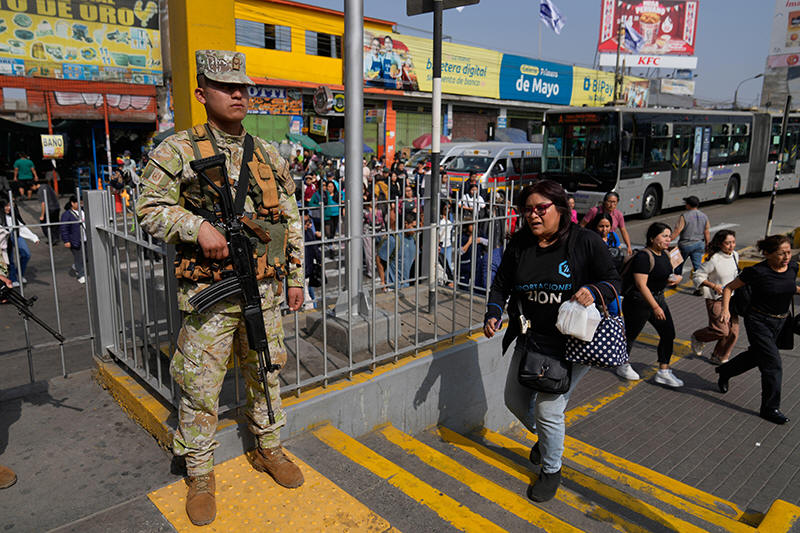
“There have already been several states of emergency, the
extortions continue, the murders do not stop,” Manuel Timoteo
said as he waited for a bus in northern Lima. “The soldiers go
out for a few days, stand with their rifles on a corner, leave
and everything remains the same.”
Boluarte’s government declared a state of emergency in March,
which was extended until May. The measure was harshly criticized
for its ineffectiveness in combating criminal groups that extort
small businesses and kill public transportation workers —
sometimes even in front of passengers.
Peru has seen a rise in crime rates in recent years. Homicides
rose from 676 cases in 2017 to 2,082 in 2024, while extortion
complaints increased from 2,305 in 2020 to 21,746 last year,
according to government data. Most victims are working class.
All contents © copyright 2025 Associated Press. All rights
reserved |
|