Warming winters lead to more nitrate pollution in the drinking water
near farms
[April 02, 2026]
By MELINA WALLING
When pollution gets bad enough in the rivers supplying Iowa's largest
city with drinking water, it costs Des Moines around $16,000 a day to
run a special system to filter out dangerous nitrates. It’s a fact of
life in the agriculture-dependent state — and climate change is making
the water quality problem even worse.
The nitrates come from fertilizer and pesticides that make their way
into the soil and then waterways like the Raccoon and Des Moines rivers.
It’s not usually a problem in winter, but this year Iowa's capital had
to filter in January and February — just the second time that’s happened
in more than 30 years. That’s likely going to mean higher water bills
for people who live in a state with some of the nation’s waterways that
are most vulnerable to nitrate pollution.
Experts blame weather conditions, including warming winters, for a
costly problem they say will only grow across farm country.
When it comes to winter nitrate pollution events, “We are more apt to
see these in the future. Are they going to occur every year? No. But the
ingredients are there for them to potentially occur more often,” said
Justin Glisan, Iowa's state climatologist.
Why warmer winters lead to more water pollution
The fertilizers and pesticides that farmers use leave nitrogen and
phosphorus in their fields. Rain or snowmelt then carries the chemicals
into drinking water, which is dangerous. Ingesting too many nitrates can
cause health issues like cancer or blue baby syndrome, low oxygen levels
in infants.
As Earth warms due to human-caused climate change, the ground isn’t
staying frozen as consistently in many places, and snow is often melting
or falling as rain on thawed ground. That all adds up to more winter
days when nitrates are likely to reach unhealthy levels.

Scientists say one effect of Earth’s warming is more frequent extreme
weather events, including drought and intense bursts of rainfall from an
atmosphere that now holds more moisture than in the past.
Intense dryness followed by intense wetness means massive amounts of
water moving through the soil, bringing farm chemicals like nitrogen
with it, Glisan said.
And a warmer atmosphere is thawing Earth's polar regions and causing
more of those winter flip-flops from frigid polar air to warmer, less
snowy weather, he said.
Even though some storms brought a lot of snow this winter, it didn't
stay on the ground for very long. Instead, snow insulated the soil in
some areas from freezing too deep, and a quick thaw let melting snow,
followed by pounding rain, travel down through the soil and eventually
into streams.
Where the ground isn't consistently frozen, nutrients aren't as “locked
in” to the soil frost.
“In central and southern Illinois, we’ve always dealt with a sort of
ephemeral freeze-thaw, freeze-thaw process. What we’re seeing is that’s
really tracking farther north,” said Trent Ford, Illinois' state
climatologist.
Stakes are high for low-income and rural communities
Nitrate pollution is a big problem for low-income, rural residents
across the United States, said Samuel Sandoval Solis, a professor at the
University of California-Davis and an extension specialist in water
resources management.
While some communities already have the infrastructure to manage nitrate
levels in drinking water, like filtration systems, many others don't.
Around 15% of the U.S. population relies on drinking water wells that
are private, according to the U.S. Geological Survey. Nitrates can seep
into those wells.
[to top of second column]
|
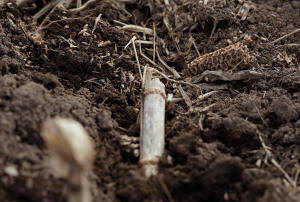
A field used for corn silage on Blue Spruce Farm is pictured on
Tuesday, March 24, 2026, in Bridport, Vt. (AP Photo/Amanda Swinhart)
 Testing well water regularly and
correctly filtering it in a home can cost hundreds of dollars a
year. Small communities whose water treatment facilities aren't yet
equipped to filter nitrates will also have expensive decisions to
make, Sandoval said.
More research is connecting climate change,
runoff and nutrient loss
States have been wrestling with nitrate pollution for years, but
they're starting to realize increasingly warm winters are making
that tougher — like in Illinois, where yearly reports on the issue
have started to more explicitly mention the role of climate change,
said Joan Cox, program manager for the Illinois Nutrient Loss
Reduction Strategy.
Scientists know there's more nitrogen going downstream in the
winter, but they're still trying to figure out whether that means
more pollution overall, said Carol Adair, a professor at the
University of Vermont who has studied how rain-on-snow events could
worsen nutrient pollution.
Either way, there's little known about the consequences of those
changes on ecosystems, Adair said. She thinks because there's less
plant life to suck up nitrogen in the winter, more could end up
further downstream, like in the Gulf's “dead zone” where fertilizer
pollution contributes to an area of low to no oxygen, which kills
fish and marine life.
Dani Replogle, a staff attorney for Food and Water Watch, a
nonprofit for sustainable food and clean water, said factory farm
operators try to plan manure and fertilizer applications when
precipitation is unlikely. But that is “increasingly not a
successful strategy because everything is becoming so
unpredictable,” she said.
Regulating nutrient pollution has proven difficult
Mandating that producers curb farm chemicals in water has proven
difficult in agricultural areas, especially in Iowa, where the
state’s farm lobby has opposed mandatory rules.
Trump’s EPA has delisted seven Iowa waterways from the federal
Impaired Waters List, which under the Clean Water Act would have
required the state to set limits on how much pollution gets into
them. Food and Water Watch has announced an intent to sue.
As for Iowa's water treatment facilities, they are preparing
resiliency plans for a future with more winter nutrient pollution,
said Amy Kahler, CEO and general manager at Des Moines Water Works.
But she thinks polluters upstream should clean up their acts.

“There really are two paths. One is conservation efforts and
responsible watershed practices. And the other is spending hundreds
of millions of dollars in treatment solutions,” Kahler said.
She thinks the best solution is the former, since it also has
positive impacts on quality of life.
In 2015, the agency sued for the millions of dollars it was being
forced to spend to filter unsafe levels from drinking water taken
from the Des Moines and Raccoon rivers. A judge ultimately dismissed
the lawsuit.
All contents © copyright 2026 Associated Press. All rights reserved |