Commercial salmon fishing to open in California for the first time since
2022 as population rebounds
[April 13, 2026] By
SOPHIE AUSTIN
SACRAMENTO, Calif. (AP) — Federal fishery managers voted Sunday to open
waters off the coast of California to commercial salmon fishing for the
first time since 2022, with the population rebounding after wet winters
ended a long drought.
The decision by the Pacific Fishery Management Council to allow limited
commercial and recreational salmon fishing off the coast is a win for
the state's salmon fishing industry, which has grappled with years of
season closures due to dwindling fish stocks. The council, which manages
fisheries off the West Coast, barred commercial salmon fishing off
California for the past three years. It voted last year to allow some
recreational fishing for the first time since 2022.
The council is an advisory group to the U.S. Secretary of Commerce,
which makes the final decision but historically has followed the
council’s rulings. The secretary’s decision will be posted in the
Federal Register within days.
“It is great news for everyone — for the fishermen, for seafood lovers
and the environment because it means that salmon populations are back to
a much healthier state,” California Natural Resources Secretary Wade
Crowfoot said ahead of the decision.
The federal council has said forecasts for Chinook and coho salmon off
the West Coast look promising this year, though the season will open
with some restrictions.
Recreational fishing along a stretch of the coast spanning about 50
miles (80 kilometers) south of San Francisco to the Mexican border
already began this month, according to the Golden State Salmon
Association. Sportfishing to the north, including in waters off San
Francisco, will begin in June. Commercial fishing along the coast will
begin in May.

The council voted to limit commercial fishing to only a few days and set
quotas for the number of salmon that can be caught.
Biologists say the Chinook salmon population declined dramatically after
years of drought, disrupting the fish's migration upstream to lay their
eggs. Many in the fishing industry say rules from the first Trump
administration also allowed more water to be diverted from the
Sacramento River Basin to agriculture. That caused even more harm by
increasing river temperatures and dropping water levels when baby salmon
were trying to make it from their spawning beds to the ocean.
[to top of second column] |
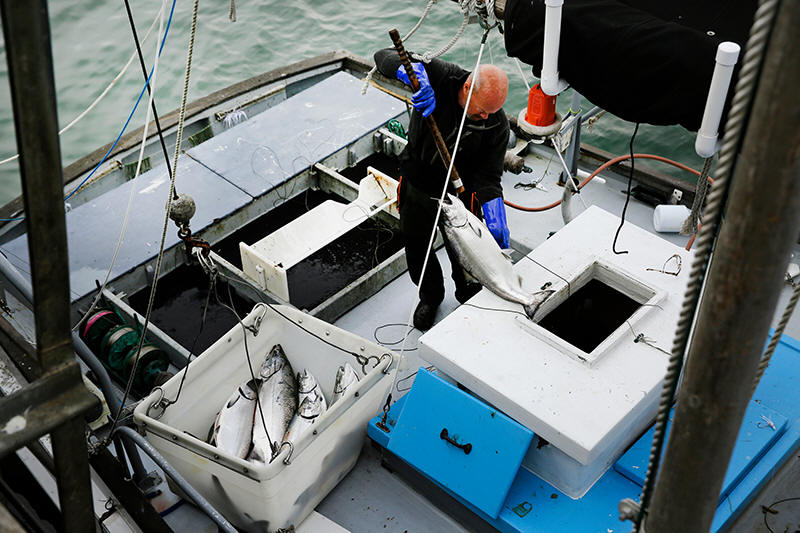
Mike Hudson unloads chinook salmon off his boat at Fisherman's Wharf
in San Francisco on July 22, 2019. (AP Photo/Eric Risberg, File)
 But recent wet winters have brought
in more cold water, which the fish need to spawn.
Salmon populations have also bounced back in areas where they were
long absent due to river restoration efforts, Crowfoot said.
After four hydroelectric dams on the Klamath River were removed in
2024, salmon returned to spawn in waters along the Oregon-California
border where they hadn't for decades. The state has since removed
barriers that prevented the passage of salmon in other waterways,
including on Alameda Creek in the San Francisco Bay Area, Crowfoot
said.
Much of the salmon caught in the ocean originate in California’s
Klamath and Sacramento rivers. After hatching in freshwater, they
spend three years on average maturing in the Pacific, where many are
caught by commercial fishermen, before migrating back to their
spawning grounds, where conditions are more ideal to give birth.
After laying eggs, they die.
Preserving a healthy salmon population is crucial for the
environment and the state's economy, Crowfoot said.
“Salmon are an iconic species in California and critically important
to our tribal communities and our fishing sector,” he said.
Vance Staplin, executive director of the Golden State Salmon
Association, largely blamed state and federal water management
policies for low salmon stocks in recent years. The fishing season
closures had a large impact on the state’s fishermen, bait shops and
companies that make fishing equipment, he said.
“People don’t understand how big of an industry salmon is to
California,” he said.
All contents © copyright 2026 Associated Press. All rights reserved |