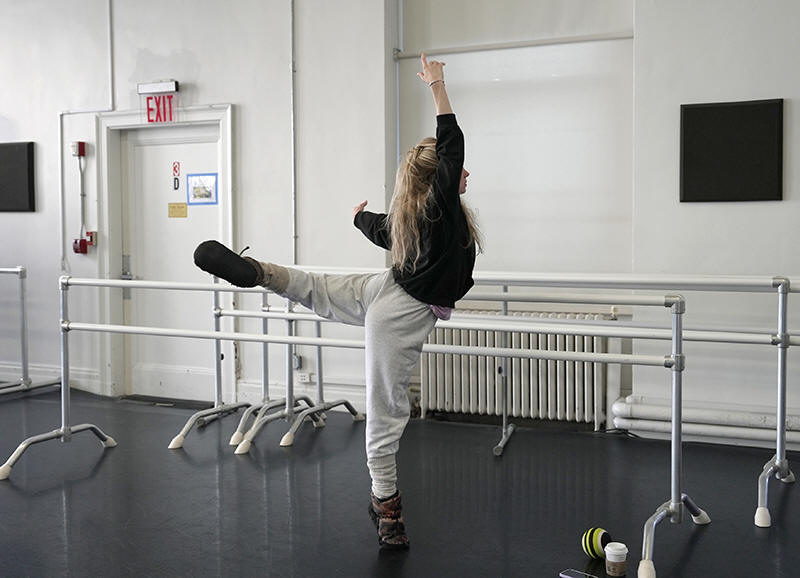
Hearing aids can seem like a big step. This NYC Ballet principal dancer
doesn't regret taking it
[April 13, 2026]
By ADITHI RAMAKRISHNAN and SHELBY LUM
NEW YORK (AP) — Sara Mearns was missing her cues.
She couldn't hear what her dance partner was saying from across the
studio. She was late for her entrances because the music sounded too
soft.
Without telling anyone, she finally made an appointment to get her
hearing checked.
Mearns learned that she had hearing loss. After years of isolation, she
got the tools to make sense of a world that had gotten muffled.
Now, she's one of the first dancers with the New York City Ballet to
wear hearing aids during performances.
“I feel like it's a whole new chapter of my life,” Mearns, 40, said in
an interview with the AP.
While hearing loss is common in older adults, it can happen at any age
and can be caused by things like nerve damage, infection or head trauma.
For Mearns, it may have been a blend of factors including genetics,
medical conditions and exposure to loud noise.
Signs and symptoms of hearing loss
According to the National Institutes of Health, less than a fifth of
American adults aged 20 to 69 who could benefit from wearing hearing
aids have ever used them. That's due to lack of access, shame or
embarrassment and just not knowing the symptoms.
“Hearing loss is often not detected by the person because what they
can't hear, they don't know,” said Dr. Anil Lalwani, a hearing expert
with Columbia University Irving Medical Center.

Still, “there are a lot of symptoms of hearing loss that are not hearing
less,” said Dr. Maura Cosetti with Mount Sinai’s New York Eye and Ear
Infirmary.
One thing to look out for is saying “what” more often, and not being
able to hear friends and family in noisy settings like restaurants.
Other symptoms include ringing, a sensation like something is stuck in
the ears or conversations sounding muffled.
During the COVID-19 pandemic, Mearns couldn't hear conversations when
people were wearing masks.
“I realized that I was reading everybody’s lips to understand what they
were saying,” she said.
If experiencing hearing loss, you have options
Experts say to let a doctor know if you think you may be experiencing
symptoms of hearing loss. They can help you connect with an audiologist
or an ear, nose and throat specialist to get a hearing test.
Cosetti with Mount Sinai said the Mimi Hearing Test app can be useful
resource to get a sense of your hearing. Seeing a professional is the
best way to figure out what's actually going on — like whether your ears
are just plugged up with wax or fluid.

[to top of second column]
|
Sara Mearns, principal dancer at New York City Ballet, warms up on
March 17, 2026, in New York. (AP Photo/Shelby Lum)
 Hearing aids fine-tune the sound
signal that enters the brain, enhancing speech while lowering
background noise. They can be expensive, but many are now available
over the counter. Some Apple AirPods also can be used as hearing
aids.
For more severe forms of hearing loss, doctors may recommend a
device called a cochlear implant, which converts sounds into
electrical signals that are sent to the brain. These include a
surgically inserted component and can take months to get used to.
Hearing aids are an adjustment, but can be worth it
Mearns initially felt embarrassed to step into the booth for her
hearing test, knowing she wouldn't be able to hear all the words.
Her audiologist, Marta Gielarowiec, helped her understand what she
was missing and guided her to appropriate hearing aids.
“It's definitely not a one size fits all. There is a lot of
adjustment, tuning and calibration involved,” said Gielarowiec, who
runs a practice in New York. “Overall, the goal is to maximize the
hearing that’s left.”
Addressing hearing loss can help boost mental health, improve
communication and slow cognitive decline for people at high risk of
dementia.
When Mearns walked out of her audiologist's office wearing her aids
for the first time, she felt overwhelmed. She could hear the
pattering of shoes on the ground, the chirping of birds across the
street and the billowing of a flag a block behind her. Returning to
her dressing room, she cried.
She can now hear the full might of the orchestra when she performs —
and take phone calls in her ears.
The life she was living before, she said, was exhausting. At the end
of every day she was spent from the strain of asking people to
repeat themselves and missing out on conversations and the punch
lines of jokes.

“I don’t want people to feel what I felt, where I was embarrassed
and I was quiet about it,” she said. “Because now that I’m on the
other side, I’m so happy.”
___
The Associated Press Health and Science Department receives support
from the Howard Hughes Medical Institute’s Department of Science
Education and the Robert Wood Johnson Foundation. The AP is solely
responsible for all content.
All contents © copyright 2026 Associated Press. All rights reserved |