Mentally ill man restrained in chair for 3 days settles case in
Williamson County
[April 13, 2026]
By Grace Hauck an Illinois Answers Project
A man with mental illness who says he was strapped down to a chair for
three days at Williamson County Jail reached a settlement in his civil
rights case against the county.
Jail staff restrained Travis Braden, 39, to a chair in 2022 after he
expressed suicidal ideation and swallowed a piece of metal. He filed a
complaint against the county months later, represented himself from
prison and settled in January for $27,500.
“To me, it wasn’t enough,” Braden said. “… And the sad part of it is,
there’s no accountability behind it.”
The Illinois Answers Project previously featured Braden’s story in a
statewide investigation into the widespread and prolonged use of
restraint chairs in county jails, and an expert opinion later filed in
Braden’s case cited the investigation’s findings.
County records indicate jail staff restrained Braden in a chair on a
Friday morning in May 2022. The records do not state when Braden was
released from the chair, but Braden claims he was restrained until
Monday morning as a “punishment exercise,” with no medical care.
“I had spent over 72 hours in restraints and only let out of the
restraints a handful of times for no longer than 3 minutes,” Braden
wrote in the complaint. The chair manufacturer recommends limiting
restraint to two hours at a time and no more than ten hours total, but
Illinois jails often surpass those limits.
In his complaint, Braden alleged jail staff were deliberately
indifferent to his medical needs and used excessive force and unlawful
restraint, among other allegations. He said the prolonged restraint
caused significant emotional distress, extreme pain and psychological
trauma.
“I suffered cuts, abrasions, joint stiffness, back pain, scars from the
excessively tight cuffs and shackles on my wrists and ankles cutting
into my skin,” Braden wrote.

Braden filed the complaint against the jail months after the incident.
When he later requested video of the incident, the jail said video
wasn’t available, records show.
Williamson County’s restraint chair policy allows staff to use the
device if a detainee exhibits “violent or uncontrollable behavior and to
prevent self harm, injury to others or damage to property when other
control techniques are not effective.” The policy requires medical staff
to be notified and prohibits staff from restraining someone as
punishment.
Braden said staff should have provided medical attention and followed
policy. “You shouldn’t be going in that restraint chair in and out
repetitively for days and days and days,” he said. “There’s nothing in
this world that was more terrifying.”
[to top of second column]
|

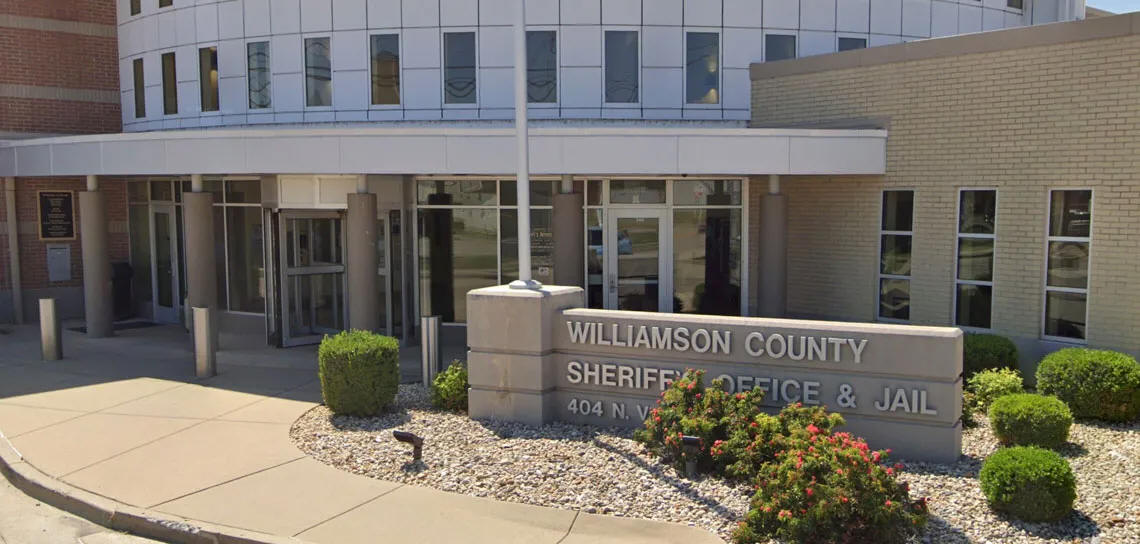
Williamson County’s restraint chair policy requires medical staff to
be notified and prohibits staff from restraining someone as
punishment. (Credit: Google Earth)

Braden’s settlement with Williamson County, which names current and
former sheriff’s office employees, does not include an admission of
misconduct and states that the defendants “continue to deny any and all
wrongdoing and liability.”
“The fact that the case was settled does not have any bearing on the
strengths or weaknesses of Mr. Braden’s claims or the county’s
defenses,” said defense attorney Bhairav Radia.
Williamson County’s restraint chair policy requires medical staff to be
notified and prohibits staff from restraining someone as punishment.
Braden also has an ongoing case in Franklin County, where jail staff
restrained him in a chair for 68 hours in 2022. A state disability
rights watchdog group concluded that the jail violated state standards
and county policies in improperly restraining Braden, as well as another
mentally ill man who was restrained for 27 hours. That case entered a
settlement conference in March, after the judge denied defendants’
motion for summary judgement.
The Williamson County sheriff did not respond to requests for comment.
Franklin County’s sheriff and defense lawyer in the ongoing federal case
also did not respond.
Illinois county jails restrain people in chairs more than a thousand
times a year, even though groups such as the United Nations Committee
Against Torture and Amnesty International have urged U.S. officials to
ban their use as a method of restraining people in custody.
Like Braden, many of the people restrained in Illinois have a mental
illness. Jail officials say their facilities are overcrowded,
understaffed and ill-equipped to handle detainees in crisis, and that
they face major delays in transferring detainees to state psychiatric
hospitals.
Braden was released Wednesday from the Joliet Treatment Center, an
Illinois Department of Corrections facility for people with severe
mental illness, after serving over two years for theft under $300 and
aggravated fleeing police. Back home in Benton, he said mental illness
is always a struggle. “But I’m better,” he said. “I’m doing better.”
This story was made possible by a grant
from The Richard H. Driehaus Foundation to the Illinois Answers Project.
Story by Grace Hauck for Illinois Answers.
This article first appeared on
Illinois Answers Project and is republished here under a Creative
Commons Attribution-NoDerivatives 4.0 International License. |