Iran war has some US water utilities facing a fluoride shortage
[April 14, 2026]
By DEVI SHASTRI
It's not just gas prices: Some U.S. water utilities are reporting the
Middle East war is disrupting their ability to maintain recommended
fluoride levels in the drinking water.
Over the past few weeks, a few water utilities have said their supply
had been disrupted, according to the Association of Metropolitan Water
Agencies. Fluoride is used in water systems as a public health measure
to prevent tooth decay.
Here's what to know.
What's driving the fluoride shortage?
Israel is one of the world’s top exporters of fluorosilicic acid,
according to the U.S. Environmental Protection Agency. EPA data also
shows the U.S. is among the world’s top five importers of the product.
At least one Israeli supplier has been facing workforce challenges
because many employees have been called into active military service,
said Dan Hartnett, chief policy officer for the Association of
Metropolitan Water Agencies.
“That has led to decreased production, and supply shortages for the U.S.
market," he said.
Not every water system is affected
The number of water utilities affected so far is small, but the shortage
is affecting hundreds of thousands of people. As the conflict continues,
"there will likely be additional stressors placed on the supply chain,
leading to shortages in additional communities,” Hartnett said.

The country's eighth largest water and wastewater utility, WSSC Water in
Maryland, is among those facing a shortage. On April 7, utility
officials said they were lowering the level of fluoride in the water to
0.4 milligrams per liter, down from the recommended 0.7 milligrams per
liter.
Chuck Brown, spokesperson for the utility serving 1.9 million customers,
said officials did not know how long the shortage would last, "but we
feel confident that we’ll be able to stretch that out for a couple more
months.”
In Pennsylvania, the borough of Lititz told its water customers it had
to halt fluoridation for a couple weeks last month because of supply
issues.
What dentists say you should do
Water utilities add fluoride voluntarily to improve communities' oral
health, so lower levels have no effect on drinking water safety.
A few months' drop in fluoride levels is probably not a cause for
concern for most people, said Dr. Scott Tomar, an American Dental
Association community water fluoridation expert.
[to top of second column]
|

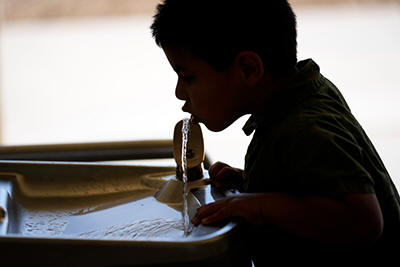
A student drinks from a water fountain inside Cuyama Elementary
School, Sept. 20, 2023, in New Cuyama, Calif. (AP Photo/Marcio Jose
Sanchez, file)

Research from places that stopped fluoridating their water — Calgary,
Canada; Juneau, Alaska; and Israel — has found that lower levels can
have an impact over the span of years.
“Based on the best available information we have, below about 0.5
milligrams per liter, you’re probably not going to see effective
preventive exposure,” he said.
Tomar said younger children would be the first to experience tooth
decay, because the fluoride strengthens enamel as their teeth are
developing and once they've grown in.
He recommends people in shortage areas brush twice a day with a fluoride
toothpaste and keep up with their routine dental appointments. If people
are concerned they aren't getting enough fluoride, they should talk to
their dentist before taking a fluoride supplement or other treatment.
What else should I know about fluoride in the water?
Research shows water fluoridation is beneficial even when it is also
available through toothpaste and other means. Nearly two-thirds of the
U.S. population gets fluoridated drinking water, according to CDC data.
The addition of low levels of fluoride to drinking water was long
considered one of the greatest public health achievements of the last
century. The American Dental Association credits it with reducing tooth
decay by more than 25% in children and adults.
However, misinformation about fluoride's safety has proliferated. Last
year, Utah became the first state to ban public water fluoridation. And
Health Secretary Robert F. Kennedy Jr. has repeatedly sown doubt about
its safety and restricted the use of fluoride for dental health.
“The levels we use in the United States is perfectly safe," Tomar said.
"Despite a lot of the misinformation, there are no adverse health
effects associated with the levels we use in our drinking water.”
All contents © copyright 2026 Associated Press. All rights reserved
 |