Warner Bros shareholders approve Paramount's $81 billion takeover of the
Hollywood giant
[April 24, 2026] By
WYATTE GRANTHAM-PHILIPS
NEW YORK (AP) — An $81 billion Warner-Paramount mega merger has received
shareholders’ stamp of approval, propelling a deal that could vastly
reshape Hollywood and the wider media landscape closer to the finish
line.
On Thursday, Warner Bros. Discovery said the overwhelming majority of
its stakeholders voted in support of selling Paramount for $31 a share.
Including debt, the deal is valued at nearly $111 billion based on
Warner's current outstanding shares.
Paramount, which was bought by Skydance just last year, wants all of
Warner. That means HBO Max, cult-favorite titles like “Harry Potter” and
even CNN could soon find themselves under the same roof with CBS, “Top
Gun” and the Paramount+ streaming service.
David Zaslav, CEO of Warner Bros. Discovery, said in a statement that
stockholder approval marks “another key milestone toward completing this
historic transaction.” Paramount added that it looks forward to closing
in the coming months, and “realizing the creation of a next-generation
media and entertainment company.”
It's not a done deal quite yet. The acquisition still faces ongoing
regulatory reviews. Many critics have decried further consolidation in
an industry already controlled by just a few major players, and are
calling for the merger to be blocked — if not from the Trump
administration, which so far seems unlikely, perhaps at the state level
or through other court fights both in the U.S. and abroad.
Meanwhile, Warner shareholders rejected a separate measure Thursday
outlining post-merger payments for company executives.

The takeover fight
Paramount’s quest for Warner has been a bumpy road. And Warner
leadership wasn’t always eager to enter this particular marriage.
Late last year, Warner rebuffed Paramount’s overtures to instead strike
a $72 billion studio and streaming deal with Netflix. Paramount,
meanwhile, went directly to shareholders with a hostile bid to take over
the whole company, including the cable business that Netflix did not
want. All three companies spent months fighting publicly over who had
the better offer on the table. Warner’s board repeatedly backed
Netflix’s bid. But eventually, Paramount offered more money and Netflix
abruptly bowed out of the race.
That corporate drama may now be over, but implications of a potential
Warner sale remain. Thousands of actors, directors, writers and other
industry professionals have voiced “unequivocal opposition” to the
Paramount deal, in a letter arguing that further consolidation will lead
to job losses and fewer choices for filmmakers and movie goers.
Jane Fonda’s Committee for the First Amendment called Thursday's vote to
advance the merger a “serious setback” — but maintained the fight wasn't
over. “A handful of powerful decision-makers should not be allowed to
quietly reshape American media, culture, and creative life without
accountability,” the advocacy group said in a statement, while pointing
to other efforts to challenge consolidation.
Some have called on states, rather than the federal government, to fight
the deal. California Attorney General Rob Bonta has been particularly
vocal about the transaction, and said his state is investigating it.
"State attorneys general across the country are stepping up to stop this
antitrust disaster. We need to keep up this fight," Democratic Sen.
Elizabeth Warren, a longtime antitrust hawk, wrote on social media
Thursday.
What would come under the same roof
The merger would bring together two of Hollywood’s five remaining legacy
studios. It would also join two major streaming platforms (Paramount+
and HBO Max) and two big names in America's TV news landscape (CBS and
CNN ) — as well as a heap of other brands and entertainment networks.

[to top of second column] |
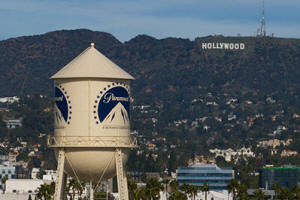
The Paramount Pictures water tower is seen in Los Angeles, Dec. 18,
2025, with the Hollywood sign in the distance. (AP Photo/Jae C.
Hong, File)
 Company executives argue this will
be good news for consumers, who they say will have access to bigger
content libraries, particularly if HBO Max and Paramount+ become one
streaming service. And Paramount CEO David Ellison has tried to
assure filmmakers with a 45-day theatrical window guarantee and goal
to release 30 movies a year between Paramount and Warner, which he's
said will remain stand-alone operations under a combined company.
“I love cinema and I love film,” Ellison said at CinemaCon last
week. "You can count on our complete commitment.”
But the new owner will also be looking to cut costs. Regulatory
filings have already indicated that would include layoffs and
downsizing some overlapping operations. And critics are skeptical
about consumer benefits — warning of higher prices that could arise
when it comes to streaming, and potentially less diversity in
content down the road.
Then there’s the news. Since coming under Skydance ownership less
than a year ago, CBS has already seen significant editorial shifts,
notably with the installation of Free Press founder Bari Weiss as
CBS News editor-in-chief. If the Warner takeover goes through, many
are expecting similar changes at CNN, a network that has long
attracted ire from President Donald Trump.
Political implications
Questions of political influence have piled up. The Justice
Department and company leadership have maintained that politics will
not play a role in the regulatory process — but Trump himself has
publicly waded into Warner’s future at times, despite backpedaling
on what he once suggested his personal role would be.
The Republican president also has a close relationship with the
Ellison family, particularly Oracle founder Larry Ellison, who is
putting billions of dollars on the table to back the bid for his
son’s company. And Thursday evening, Paramount's chief is also
reportedly hosting a dinner to honor Trump at the Institute of
Peace, which was renamed for Trump last year.

Support for Paramount’s proposed buyout is falling largely along
party lines in Washington. Democratic senators held a “spotlight”
hearing on the merger last week, and have been more outspoken about
antitrust concerns spanning from a potential Paramount-Warner combo.
In contrast, lawmakers from both sides questioned Netflix co-CEO Ted
Sarandos and Warner’s chief revenue and strategy officer Bruce
Campbell in February, calling on regulators to heavily scrutinize
that deal at the time.
Meanwhile, Paramount has secured money from several sovereign
investment funds — including Saudi Arabia’s Public Investment Fund,
as well as funds from the United Arab Emirates and Qatar, per
regulatory filings. But such investors will not have voting rights
in a future Paramount-Warner combo, the filings noted. Paramount has
not publicly specified how much they’re contributing.
Other countries, including European regulators, are looking at the
deal — and again, states may try to challenge it too. Labor unions
and other entities could also wade in.
Shares of Paramount Skydance fell about 4.5% by Thursday's close,
and Warner Bros. Discovery's stock slipped slightly as well.
All contents © copyright 2026 Associated Press. All rights reserved |