Health officials urge caution for Gulf Coast beachgoers during surge of
deadly bacterial infections
[August 10, 2026]
BATON ROUGE, La. (AP) — Health officials in Louisiana are urging
beachgoers to take precautions during a summertime surge in infections
from a flesh-eating bacteria found in coastal waters.
Louisiana has confirmed nine cases of Vibrio vulnificus infections this
year, the state's health department said last week in a news release.
All were hospitalized, and five died. During the same period over the
previous decade, Louisiana reported an average of seven cases and one
death.
“Seek medical care immediately if a wound exposed to brackish or salt
water becomes red, swollen, painful, warm or discolored," officials said
in the release. "Tell the health care provider about the water
exposure.”
The Gulf is an ideal environment
Vibrio bacteria thrive in seawater and in the brackish mix of fresh and
saltwater found in estuaries and lagoons. Most infections are reported
from May to October, and most happen in states along the Gulf Coast.
Doctors say the Gulf is an ideal environment with the right amounts of
salt and heat to let this organism proliferate.
The mostly deadly type is Vibrio vulnificus, according to the Centers
for Disease Control and Prevention. As many as one in five of those
infections are fatal, a much higher rate than other types of Vibrio
bacteria.

Florida, which tends to have more infections than other states, has
reported 14 Vibrio vulnificus cases and two deaths so far this year,
compared with 33 cases and five deaths for all of last year. Records
show more cases in years when Florida is hit by tropical storms and
hurricanes.
Bacteria enters through breaks in the skin
Some people become infected by eating raw or undercooked shellfish —
particularly oysters. But a large percentage fall ill when the person is
in ocean or brackish water and the bacteria enter the body through small
breaks in the skin.
[to top of second column]
|
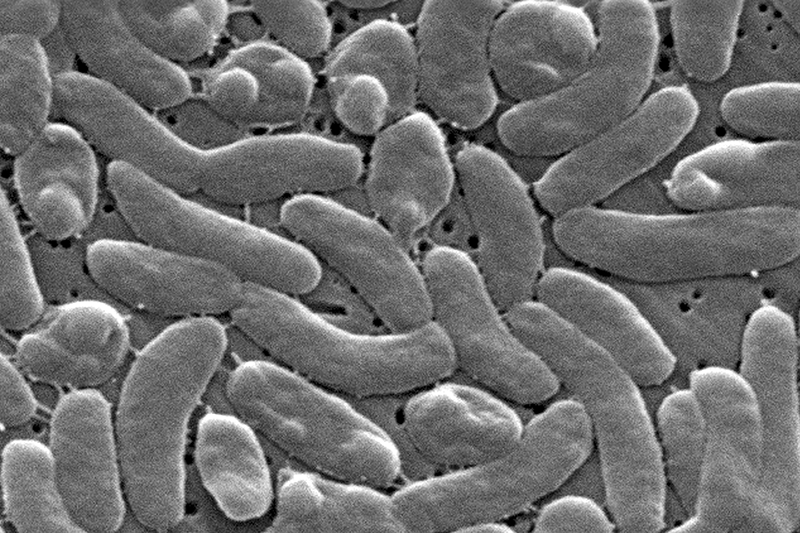
This 2005 electron microscope image provided by the Centers for
Disease Control and Prevention shows Vibrio vulnificus bacteria.
(Janice Haney Carr/Centers for Disease Control and Prevention via
AP, File)
 Doctors say severe cases are seen
more often in elderly patients, people with weakened immune systems,
and those with liver disease, diabetes and certain chronic
illnesses.
Scientists say climate change is helping the germs proliferate and
spread northward. A 2023 study found that the northernmost case has
been shifting by about 30 miles each year, and that cases overall
have been rising.
Beachgoers can protect themselves
Vibrio vulnificus can enter the body through unhealed cuts and
scrapes, recent piercings and tattoos, and recent surgical
incisions. People should immediately wash cuts and scrapes
thoroughly with soap and clean running water after coming in contact
with coastal waters or raw seafood, the CDC said. They should see a
doctor if they start to develop symptoms such as fever, chills, and
hot red areas on the skin that start to turn dark and blister.
Oysters are a particular risk, and there is no way to tell if an
oyster is contaminated just by looking at it. People should wash
hands with soap and water after handing raw shellfish and wear
protective gloves if they have a weakened immune system and are at a
higher risk of infection.
Health officials also offer cooking instructions for clams, mussels
and other shellfish. They recommend throwing away any with open
shells before boiling or steaming.
All contents © copyright 2026 Associated Press. All rights reserved |