Canadian wildfire that forced 20,000 to flee may signal ‘new normal’
[August 13, 2026]
PENTICTON, British Columbia (AP) — A wildfire that forced
more than 20,000 people from their homes in western Canada moved so
quickly that crews had to abandon firefighting to help residents escape,
a pace British Columbia’s premier said Wednesday may represent a “new
normal.”
The Bald Range wildfire erupted Friday near Summerland, a community of
about 12,000 in British Columbia’s Okanagan region. By Wednesday, it had
grown to about 184 square kilometers (71 square miles) after destroying
homes and killing an 80-year-old woman.
"There’s an important set of lessons for us to take about how quickly
this moved and that this may be our new normal for fire speed," Premier
David Eby said. He said the blaze outpaced wildfire modeling and left
some residents with little time to evacuate.
Officials have begun damage assessments, but the area remained unsafe
Wednesday and there was no timeline for residents to return.
Crews were clearing vegetation to help slow the fire’s spread as
officials warned that thunderstorms could bring erratic winds and
increase fire activity. Highway 97, a major route through the area,
remained closed.
Eby visited an evacuation reception center in Penticton, where he said
he met people devastated by the loss of their homes.
“A lot of emotions in there, obviously,” he told reporters, calling the
woman’s death a “tragic loss.”
Summerland pharmacist Jonathan Kiesman said he was worried about
displaced patients getting their medications and said seeing the fire
approach the community “almost brought tears to my eyes.”
Officials said they were withholding broader details on property losses
until residents could be notified directly.

[to top of second column]
|
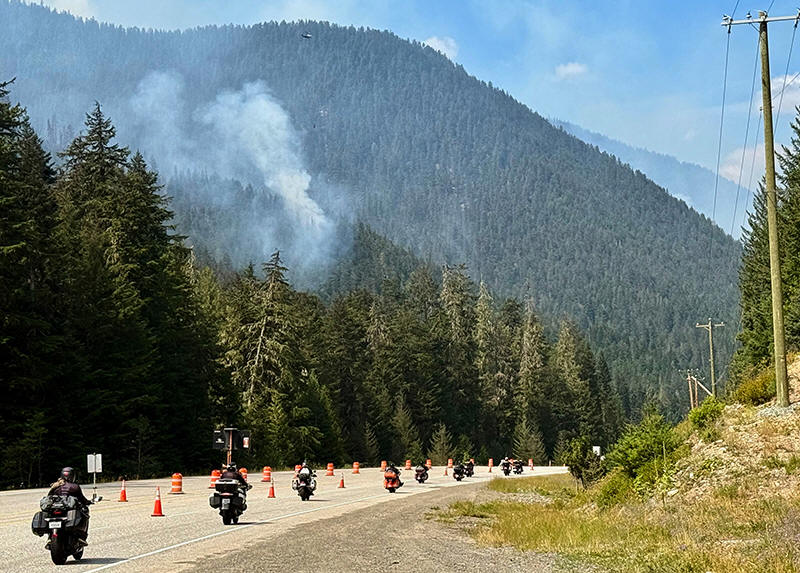
Fire crews drop water on a wildfire along Highway 3 in Manning Park,
British Columbia, as fires burn throughout the southeastern part of
the Provence on Wednesday, Aug. 12, 2026. (AP Photo/Haven Daley)

“The last thing that I would want is somebody to have the shock of
finding out on social media or on television about their home being
lost,” British Columbia Emergency Management Minister Kelly Greene
said.
Eby said the province would review the response, including whether
changes are needed to wildfire planning, building standards and
vegetation management near communities.
Given the drought and summer heat, he warned, “this is very unlikely
to be the last significant fire we see this summer.”
Summerland Mayor Doug Holmes warned that recovery would be long and
difficult.
Canada has endured a series of severe wildfire seasons in recent
years, with smoke repeatedly drifting into the United States. In
record-setting 2023, fires burned more than 14.6 million hectares
(36 million acres), an area roughly the size of Illinois.
Canada has warmed faster than the global average in recent decades,
while the amount of land burned by wildfires has increased
substantially. Much of the country’s forest is remote and dominated
by spruce and pine, conditions that can make fires difficult to
contain once they become established.
All contents © copyright 2026 Associated Press. All rights reserved |