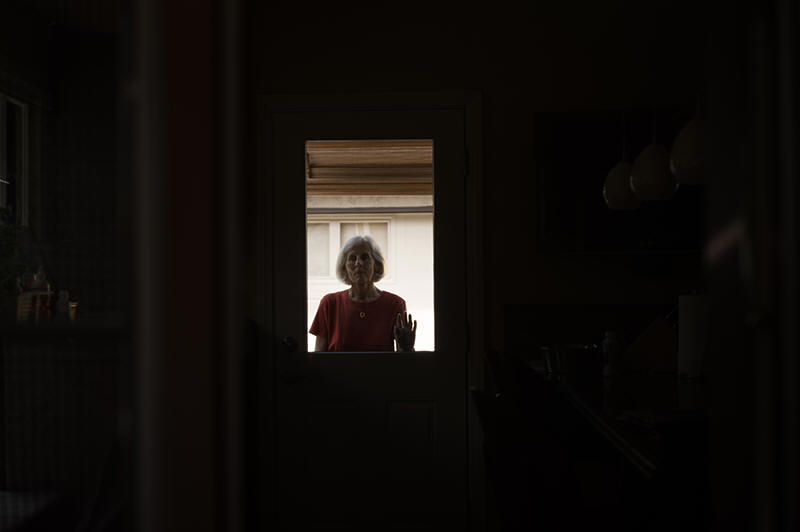
California and the federal government battle over hospice fraud, as
victims lose coverage and care
[August 27, 2026]
By JAIMIE DING
LOS ANGELES (AP) — At 71 and a few years into retirement, Linda Henry
felt like she was in good health, and only went to her doctor in
Southern California for the occasional checkup.
So it was a shock when she found out in 2024 that she had been enrolled
in hospice, a specialized end-of-life care usually provided to people
with six months or less to live. A Medicare worker told her the system
said she had heart failure.
Henry was a victim of rampant fraud in the hospice industry, a problem
that's been especially extreme in California, where scammers have taken
advantage of historically weak government oversight. Fraudsters have
created fake hospices and tricked people into enrolling, or stolen
people's identities to bill Medicare for hospice services.
California's been a focus of the Trump administration's crackdown on
fraud in federally-funded health programs, with more than 1,000
California hospices removed from Medicare since early 2025. Federal
officials estimate LA County alone accounts for an estimated $3.5
billion in fraudulent hospice claims.
The state says it's doing its part to tackle the issue. California has
revoked nearly 500 licenses since putting a moratorium on new hospices
in 2021 and in June adopted long-awaited emergency regulations that set
more stringent criteria for approving new licenses.
Since hospice is a form of palliative care meant for terminally ill
patients, once someone enrolls in it, Medicare will not pay for
additional medical treatment outside of it, leaving vulnerable seniors
to miss out on appointments and be denied crucial care. Meanwhile,
millions of taxpayer dollars are being funneled to fraudsters every
year, and those who truly need hospice care might not get it if they
enroll with a fraudulent hospice operator.
Advocates say they don’t have a clear estimate of how many people like
Henry have been unwittingly caught up in fraud, but urge state and
federal cooperation.

Hospice fraud has been a major problem in California
In 2026, the state had about 2,100 hospice organizations, down from
2,800 four years prior. New York, which has far more stringent rules for
registering a hospice, has just 39, according to its state health
department.
A 2022 state audit found rampant fraud and abuse in the system,
particularly in LA County. It found dozens of hospice agencies were
often clustered in the same building as well as a rapid increase in the
number of hospices being established and abnormally high rates of
patients being discharged. Hospice is often provided at patients’ homes,
meaning one registered hospice can serve patients in numerous locations.
In April, federal prosecutors made arrests in five cases involving
hospice fraud in the LA area. A week later, California Attorney General
Rob Bonta said 21 people were arrested for a multimillion scheme to use
stolen identities to charge for hospice services. His office has filed
more than 100 hospice-related criminal cases and secured over 50
hospice-related convictions since 2021.
“This is a California problem,” First Assistant U.S. Attorney Bill
Essayli said at a press conference announcing the federal arrests in
April. “I call California the kingdom of fraud, and Gavin Newsom reigns
over this kingdom here.”
Critics have accused the Trump administration of basing its
fraud-busting efforts on politics, with the harshest penalties placed on
states run by Democrats. Those efforts have at times contained errors.
In April, the administration acknowledged to The Associated Press it
made a significant error in figures it used to help justify a fraud
probe in New York.
“This isn’t a political game for us. This is about protecting taxpayer
dollars, protecting programs sick and vulnerable Californians rely on,
and protecting our state,” Attorney General Rob Bonta said in a
statement a few days later.
Woman spent months proving she was victim of fraud
Fraud might begin with a robocall, or a knock on the door asking someone
to sign a form giving away their personal information and Medicare
number. They might offer gift cards and vitamin supplements, or even
weekly cash deliveries in exchange for signing up for hospice.
[to top of second column]
|
Linda Henry poses for a photo in Long Beach, Calif., on July 16,
2026. (AP Photo/Jae C. Hong)

Henry believes her Medicare number was stolen after a healthcare payment
portal that services insurances was hit by a cyberattack.
She found out about her hospice enrollment in September 2024 after her
doctor billed Medicare for an allergy test and was denied. Soon, other
claims were being returned unpaid.
For months, she made dozens of calls and wrote emails to Medicare. Her
doctor wrote a letter stating that she was in good health.
She was allegedly enrolled at Fortuna Hospice Inc., which did not pick
up the phone or return her messages. At one point, Henry drove to the
listed address and found only a seemingly empty office building. She
spoke with FBI investigators, the state health and human services
agency, and a nonprofit advocacy group for Medicare patients.
“I delayed physical appointments and my colonoscopy and all this stuff
because I knew that we were going to fight about this and it wasn’t
going to get paid,” she said.
Eight months later, Medicare recognized that she was a victim of fraud.
One year after she lodged her complaint, she finally began seeing
doctors again.
Federal government increases oversight
Some of the enhanced oversight began under the Biden administration,
when the federal government said it would place newly Medicare-enrolled
hospices in California, Arizona, Nevada and Texas under a period of
enhanced oversight. The agency added Georgia and Ohio in December 2025,
and CMS announced in May a nationwide six-month moratorium on all new
Medicare enrollments by providers of hospice and home care.
The Trump administration's fraud crackdown has invited criticism for its
focus on providers with immigrant backgrounds. In January, Dr. Mehmet Oz
of the Centers for Medicare and Medicaid Services blasted rampant fraud
in Los Angeles County while standing outside an Armenian bakery and
alleging the “Russian Armenian mafia” was behind the scams. That
prompted a civil rights complaint by Newsom. An investigation into
daycare fraud in Minnesota centered on facilities run by immigrants from
Somalia.
Beyond hospice, the Trump administration has deferred more than $2
billion in Medicaid payments to the state because of “suspected fraud
and noncompliance.” Medicaid is the government-funded healthcare program
for low-income people. State officials say the federal government hasn't
provided details about why they suspect fraud.

In June, the Justice Department announced criminal charges against
fraudsters responsible for $6.5 billion in false claims submitted to
Medicare, Medicaid, and other healthcare programs across the country.
Sheila Clark, CEO of the California Hospice and Palliative Care
Association, testified at an April congressional hearing about a woman
who couldn’t get her cataract surgery approved by Medicare because she
was falsely enrolled in hospice.
The woman fell while trying to go to the bathroom at night because she
couldn’t see and broke her hip.
“She died two months later in a skilled nursing facility. That did not
need to happen,” Clark said. “These scammers here are going to do
whatever they have to do to try and survive, and we need to work at the
state level and the federal level to make sure that we are going to
clean house.”
All contents © copyright 2026 Associated Press. All rights reserved |