Malawi vaccinates a new generation of children against polio, which
still hasn't been eradicated
[February 14, 2026]
By GREGORY GONDWE
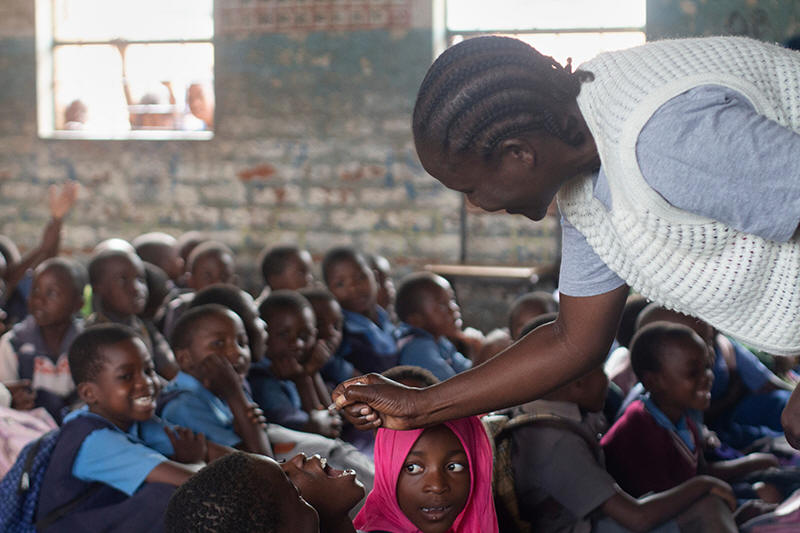
BLANTYRE, Malawi (AP) — In a classroom in southern Malawi, children sit
in rows on the floor as a health worker moves among them administering
an oral vaccine that protects against polio.
The new vaccination campaign that began on Wednesday is another reminder
that the world still hasn’t managed to eradicate the ancient disease,
which primarily affects children and can cause paralysis, despite a
concerted effort for more than 35 years by the World Health Organization
and its partners.
Health officials believe they came close several times, including five
years ago, when just five cases of the natural polio virus were reported
globally.
But a WHO report said that there were 38 cases of the natural polio
virus between January and October 2025 — all in Pakistan and
Afghanistan, the last two countries where it remains endemic — and
another 151 cases of a vaccine-derived polio virus strain in 13
countries.
Vaccines caused some cases
Those vaccine-derived cases have overtaken natural polio virus cases in
recent years, and complicated the eradication effort as one of a number
of missteps in the global fight. They come about when the weakened live
virus in oral polio vaccines mutates into a form capable of sparking new
outbreaks.

That’s the problem in Malawi, which reported last month that it had
discovered the vaccine-derived Type 2 polio virus strain in sewage water
in the southern city of Blantyre, prompting health authorities to launch
a new immunization campaign using a modified vaccine.
By WHO regulations, Malawi was required to declare an outbreak on
confirming the polio virus traces.
Malawi’s deputy health minister, Charles Chilambula, was among the
officials promoting the vaccination drive. It involves 1.7 million doses
being administered to children at schools and taken door-to-door through
some of the city’s neighborhoods by health workers.
In an attempt to reassure people, Chilambula said that the doses will
protect against the vaccine-derived form that’s been discovered in
Blantyre in environmental samples. Malawi’s Health Ministry said that
it's using the novel oral polio vaccine that’s designed to stop
circulating vaccine-derived Type 2 outbreaks.
“It’s very important that we do the vaccine now, because it also deals
with this virus which we have detected,” Chilambula said.
Eradication is still elusive
Polio is a highly contagious incurable disease that affects the nervous
system, and both the wild virus and the vaccine-derived strain can cause
irreversible paralysis. It's spread through contaminated food or water.
Around one in 200 cases results in paralysis, WHO says, typically
affecting the legs.
[to top of second column]
|
A healthcare worker administers polio vaccine to a child in the
Ndirande Township of Blantyre, Malawi, Wednesday, Feb. 11, 2026. (AP
Photo/Kenneth Jali)
 In the early 20th century, polio
struck fear in communities across the world and paralyzed hundreds
of thousands of children annually before the advent of vaccines in
the 1950s.
Despite statistics now showing more children contracting polio
viruses originating in vaccines than in the wild, global health
authorities claim a bigger victory against polio. Wild polio virus
cases have decreased by more than 99% since 1988, according to WHO,
and from 125 endemic countries to two, largely because of vaccines.
But the end goal — the eradication of polio like smallpox — has been
elusive.
Malawi became a country of concern for polio again in 2022 when a
child contracted the wild polio virus, the first case in the
southern African nation for 30 years. Last month’s announcement of
traces of a vaccine-derived strain is another setback.
Dr. Joe Collins Opio, UNICEF's Malawi chief of health, said that the
vaccination campaign would first focus on children in eight
districts, but would ultimately grow into a national effort across
the country of around 22 million people and called on everyone to
“be part of the response.”
Trying to reach enough people
Malawi, like many poor countries, relies heavily on mobile health
workers to reach people in vaccination campaigns.
Health workers, mainly women in matching blue dresses, visited
schools and homes in the Blantyre area on foot, carrying vaccines in
small cooler boxes. Officials say motorbikes will be used to take
doses further afield.
People were also invited to open-air educational events, where
officials promoted vaccines in speeches interspersed with popular
music as children held up signs urging they be protected from polio.
“Polio remains a threat,” said Dr. Akosua Sika Ayisi, a public
health specialist with WHO helping with the vaccination drive. She
outlined Malawi’s task of ensuring every eligible child "in every
community” is fully vaccinated to contribute to the global
eradication of polio.
All contents © copyright 2026 Associated Press. All rights reserved
 |