TED's Audacious Project raised $1B from donors in 2 days to fund big
nonprofit initiatives
[February 24, 2026]
By THALIA BEATY
NEW YORK (AP) — Last October, 35 major donor families, calling their
collaborative The Audacious Project, gathered in California and
committed $1.03 billion to more than a dozen nonprofits whose proposed
projects span multiple years and take on major challenges.
The collaborative, housed at TED, announced the winning nonprofits
Tuesday, after spending more than a year selecting the groups and
helping them sharpen pitches for larger projects than philanthropic
funders typically support. It's not until the donors meet in person that
they decide how much to give to each group.
Jennifer Loving, the CEO of the San Jose-based nonprofit Destination:
Home, said it was “shock and awe,” when they learned the donors had met
their funding request to help expand homeless prevention services to
multiple U.S. cities.
“It’s not for the faint of heart to work on this issue in America,”
Loving said, referencing the stigma around poverty. “And so you kind of
brace yourself. You never know if people are going to see what you see
and it was beautiful. It was really beautiful.”
Connie Ballmer, cofounder of Ballmer Group along with her husband Steve
Ballmer, the former CEO of Microsoft and owner of the Los Angeles
Clippers, has been a donor since 2021, when she went with one of their
sons to learn more about funding around climate change.
“Nowhere that I know of can you raise a billion dollars in two days,”
she said. “For an organization to raise an amount — whether it’s $40,
$60, $80 million, I mean, do you know how long that takes them to do
that kind of fundraising?”
This year, the grantees also include the Arc Institute, a relatively new
research group in California, to support its development of a virtual
model of a cell that it hopes will help scientists identify treatments
for complex diseases like Alzheimer’s.

The South Africa-based group, Tiko, also received funding to expand its
services for teenage girls, including contraception, HIV treatment and
responses to sexual violence. It was the third time Tiko had applied for
funding from Audacious, said CEO Serah Joy Malaba, with the hope of
scaling their work to reach more girls.
In total, 55 major donor families have participated in at least one
round of The Audacious Project’s work. The group expands by invitation
and the formal criteria that donors be willing to commit at least $10
million to the funding round. Many end up donating more, in part
inspired by the commitments that others make in the room.
Another donor, Tegan Acton, who cofounded Wildcard Giving along with her
husband, Brian Acton, a cofounder of WhatsApp, said she participates
because she believes in collective action and values the focus on
funding solutions developed by people close to the problems. Acton also
said she’s enjoyed seeing how different donors approach their funding
decisions.
[to top of second column]
|
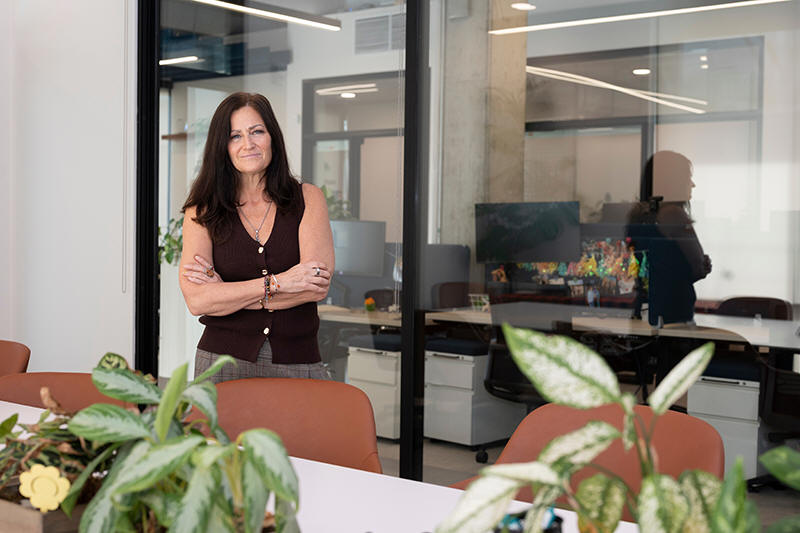
Jennifer Loving, CEO of Destination: Home, poses for a portrait at
her office on Monday, Feb. 23, 2026, in San Jose, Calif. (AP
Photo/Laure Andrillon)
 “Some people come and they have a
binder printed and they have a thousand tabs with little notes about
every project and they’ve marked up the appendices” she said,
whereas others, “show up and watch the videos and see what sparks
interest.”
As part of the application process, finalists record something like
a TED Talk that introduces themselves and their project.
Loving, from Destination: Home, said the guidance from Audacious and
The Bridgespan Group, a nonprofit consulting firm, helped sharpen
their plan for scaling their approach to homelessness prevention.
The initiative, Right at Home, identifies people and families most
at risk of losing their housing and gives them money and support so
they don’t. The approach now has won significant public funding in
San Jose.
“Going through this process was probably one of the most rigorous
things we’ve ever done,” Loving said. “I can say with total
confidence that it made us smarter.”
Loving’s project is a good example of the kind of big change that
The Audacious Project seeks to identify. Her group had not aspired
to work nationally but identified a solution they think may help
other places. Rather than opening new offices or expanding, they
will partner with local groups, bring them funding and ask them to
participate in research to assess the impact.
For the first time this year, some organizations received a second
commitment from Audacious donors, including Last Mile Health. Their
initial grant in 2018 helped to train many more community health
workers in multiple African countries, going from 2,000 to 23,000.
This time, they received $20 million to again train more of these
front line health workers but also to support an ongoing project to
coordinate and mobilize more domestic funding from the countries
where they work.
“It’s not just a philanthropic investment and then a cliff,” said
Lisha McCormick, CEO of Last Mile Health. Instead, the funds will
support a reworking of how governments fund their public health
systems following major cuts to U.S. foreign aid, which made up a
significant portion of some countries' health budgets.
Anna Verghese, executive director of The Audacious Project, said
they'd considered making second round grants for a while.
“The honest question that we and our donor community had to wrestle
with is, what kinds of partners are we if we walk away right when
that momentum is building?” she said.
All contents © copyright 2026 Associated Press. All rights reserved |