|
The
early-stage agreement would help Spirit finalize changes to its
fleet, route network and cost structure as it works toward
emerging as “a new Spirit” — a smaller, leaner carrier still
focused on offering low fares but with more options like premium
economy and its version of first-class seating with more
legroom.
“Spirit will emerge as a strong, leaner competitor that is
positioned to profitably deliver the value American consumers
expect at a price they want to pay,” said CEO Dave Davis.
The budget carrier filed for fresh bankruptcy protection in
August, months after emerging from a Chapter 11 reorganization.
Davis said at the time that the airline’s previous Chapter 11
petition focused on reducing debt and raising capital, but after
exiting that process last March, it had “become clear that there
is much more work to be done and many more tools are available
to best position Spirit for the future.”
The Florida company quickly followed the news of its second
bankruptcy in a year with announcements that it would suspend
operations in about a dozen U.S. cities and furlough 1,800
flight attendants. The airline also instituted furloughs and job
cuts before its first bankruptcy filing.
Low-cost carriers like Spirit have been under pressure by bigger
airlines, which have rolled out their own low-cost offerings.
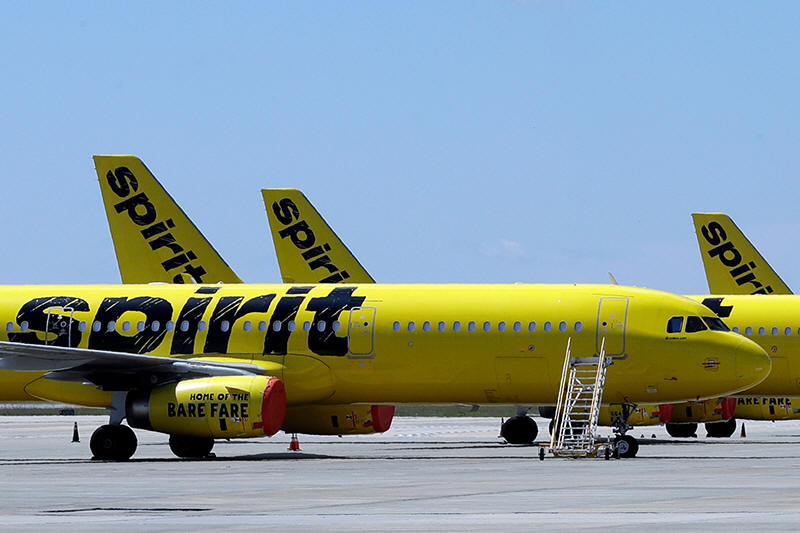
Known for its bright yellow planes and no-frills service, Spirit
has had a rough ride since the COVID-19 pandemic amid rising
operation costs and its mounting debt. By the time of its first
Chapter 11 filing in November 2024, Spirit had lost more than
$2.5 billion since the start of 2020.
All contents © copyright 2026 Associated Press. All rights reserved

|
|