|
Signed by interim President José María Balcázar and published in
the country's official gazette, the decree aims to fast-track
funding for local and regional authorities to secure vital
infrastructure — including bridges, roads, water and electricity
— while protecting the life and health of residents. More than
700 districts across the Pacific coast, the Andes and the Amazon
are now under a state of emergency.
Although rains have intensified in the past days, the new
government was unable to implement the decrees until now.
President Balcázar only swore in his Cabinet on Tuesday, ending
a period without ministers that began on Feb. 17 following the
removal of his predecessor, José Jerí, who faces an
investigation into corruption and influence peddling.
Peru's ministry of transportation said Wednesday that about 931
kilometers (580 miles) of roads have been damaged nationwide,
with the destruction concentrated in the four regions hardest
hit by rainfall. These vital routes serve more than half a
million people every week.
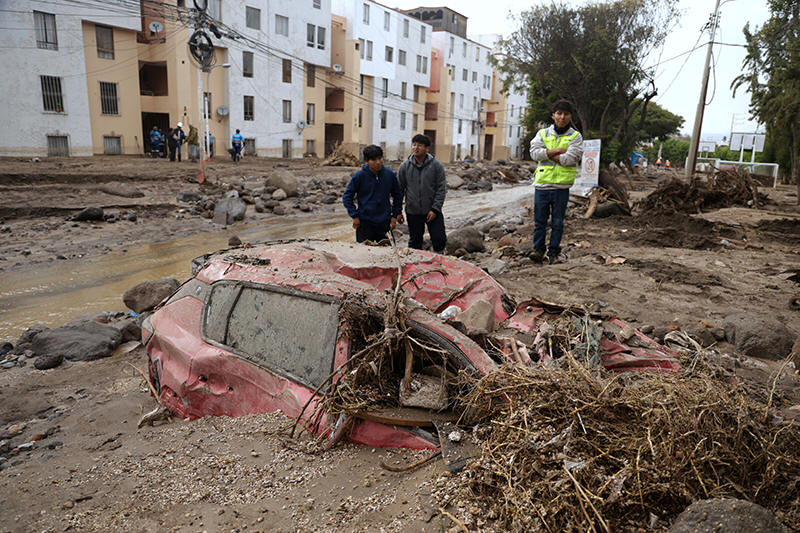
Authorities also updated the death toll, noting that 68 people
have died due to rain-related causes since December. Among the
recent victims were a father and son swept away by a landslide
in Arequipa, as well as a police officer in Lima who drowned in
the Rimac River while attempting to rescue a dog trapped by the
Andean floods.
According to authorities, Pacific waters are warming and El Nino
Costero is expected to strengthen slightly in March. The warming
of ocean waters leads to high evaporation rates and extreme
rainfall, as well as increased river flows.
All contents © copyright 2026 Associated Press. All rights
reserved |
|