Paramount must convince regulators its deal with Warner will not hurt
customers
[February 28, 2026] By
WYATTE GRANTHAM-PHILIPS and BERNARD CONDON
Not so fast, Paramount.
After a long, tumultuous fight for Warner Bros. Discovery, the Hollywood
giant has finally bested rival bidder Netflix but now faces a new
challenge: Winning over regulators.
The competition concerns are big. Paramount’s buyout of Warner Bros.
would reshape Hollywood and the wider media landscape in a way that
Netflix never threatened to do. Netflix, which abruptly dropped out of
the running this week, wanted only part of Warner. Paramount wants the
entire company.
The U.S. Justice Department still needs to weigh in on the blockbuster
combination that could give Paramount pricing power over movies and
other offerings, potentially hurting customers. The agency and other
regulators, including the Federal Trade Commission, have tripped up many
seemingly done deals before by suing to demand changes or blocking
mergers outright.
And even if U.S. regulators do sign off, those in individual states such
as California and in other countries where Paramount and Warner operate
may not, throwing up additional, possibly unsurmountable roadblocks.
Another wildcard: President Donald Trump.
Traditionally, presidents have left antitrust decision to regulators for
fear of injecting partisan politics into business matters, but Trump
appears willing to wade into affairs normally left to government lawyers
and regulators.
Big, maybe too big
A Paramount-Warner Bros. tie-up would reduce the remaining “big five”
movie studios to four and make it the biggest.

Paramount's lineup includes blockbusters such as “Top Gun,” “Titanic”
and “The Godfather.” The 102-year-old Warner Bros. studio has produced
titles ranging from “Harry Potter” and “Superman” to “Barbie” and “One
Battle After Another.”
Paramount closed its own $8 billion merger with Skydance just months
ago. Warner Bros. merged with Discovery in a $43 billion deal four years
ago.
The question for regulators: How big is too big?
When Netflix and Warner struck their deal, they said combining Paramount
and Warner, two companies with very similar assets, posed a higher risk
for job losses and other competitive concerns.
Warner's chief revenue and strategy officer Bruce Campbell told a Senate
antitrust hearing that “one of the reasons that the Netflix offer
appeals to us so much” was that the streaming giant didn’t have the same
film studio and production infrastructure as Warner. He said a Netflix
acquisition would keep those operations intact, free of any forced
selling by regulators, and allow the film side of the combined companies
to grow.
Now Warner must argue in favor of combining the two studios.
Then there are questions around the fate of employees.
Trade groups have warned for months that any deal could lead to big job
losses — a fear heightened because of the massive debt Paramount is
taking on to finance its offer.
And though some experts think layoffs are unlikely to draw antitrust
scrutiny, there are related concerns. Jim Speta, a professor at
Northwestern University’s Pritzker School of Law, said regulators may
balk if they believe the combined company will become so big that it can
decide worker pay, too.
Streaming power
Beyond traditional film production, a combined Paramount and Warner
would also hold big power in the TV and streaming wars.
Paramount owns networks including CBS, MTV and Nickelodeon, as well as
the Paramount+ streaming service. As for Warner, its counts CNN,
Discovery and HBO Max among its offerings.

[to top of second column] |
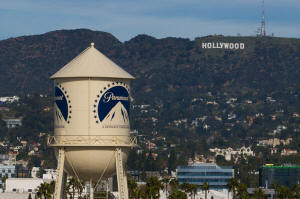
The Paramount Pictures water tower is seen in Los Angeles, Dec. 18,
2025, with the Hollywood sign in the distance. (AP Photo/Jae C.
Hong, File)
 Paramount has argued that merging
with Warner will allow it to deliver larger content libraries to its
customers and compete with much bigger streaming rivals. In the
U.S., according to streaming guide JustWatch, the combined company
would control 20% of on-demand subscriptions — about the same share
as Netflix alone holds now.
But will the merger benefit consumers? Skeptics argue a combined
company would wield enough power to control prices and increase
subscription requirements to watch certain titles.
Democratic Sen. Elizabeth Warren, a longtime antimonopoly hawk,
called a Paramount-Warner merger “an antitrust disaster threatening
higher prices and fewer choices for American families.”
The regulatory arguments will likely come down to how the market is
defined and whether it is much broader than commonly thought
including rivals like Google’s YouTube.
Netflix had said it competes against all manner of video libraries
available online, not just streaming services, and that combining
with Warner wouldn’t make it too big.
Just weeks ago, Paramount CEO David Ellison said that line of
reasoning was Netflix “trying to mask its dominance.” It's possible
he will now parrot Netflix's argument.
Implications for news
Regulators will also be asking whether putting CNN and CBS under the
same roof hurts competition so essential in the news business.
Some experts don't think news will carry the same weight in the
antitrust review as streaming and content library questions. But a
CNN-CBS combo will probably still be discussed.
Similar to broadening the definition of the streaming market,
advocates of the Paramount merger will probably point to wider media
offerings beyond traditional TV news, including information-sharing
on social media platforms.
The Trump factor
The president previously suggested he would weigh in on any Warner
deal before walking back those statements and maintaining that
regulatory approval will be up to the Justice Department.

In Paramount’s favor is Trump’s close relationship with the
billionaire Oracle founder Larry Ellison, the father of Paramount’s
CEO David Ellison, a Trump donor and a heavy financial backer of
Paramount’s bid to buy Warner.
And under new Skydance ownership, Paramount has made changes that
Trump may like. It has taken steps to appeal to more conservative
viewers in its news operations, for instance, by making Free Press
founder Bari Weiss editor-in-chief of CBS News. If the company's
takeover bid of Warner is successful, many expect similar shifts at
CNN — something Trump is likely to welcome given his frequent
criticism of its news coverage.
“The president does not like CNN, and he’s made that very clear --
and he’s even suggested that changes to CNN might be relevant to
review of the merger,” said Northwestern's Speta.
Then again, Trump is unpredictable and could still wreck the deal.
Despite the new CBS management, and the $16 million Paramount paid
Trump to settle a lawsuit over a CBS's “60 Minutes” program he
thought unfair, the president has continued to lash out at Paramount
over editorial decisions on the show.
All contents © copyright 2026 Associated Press. All rights reserved |