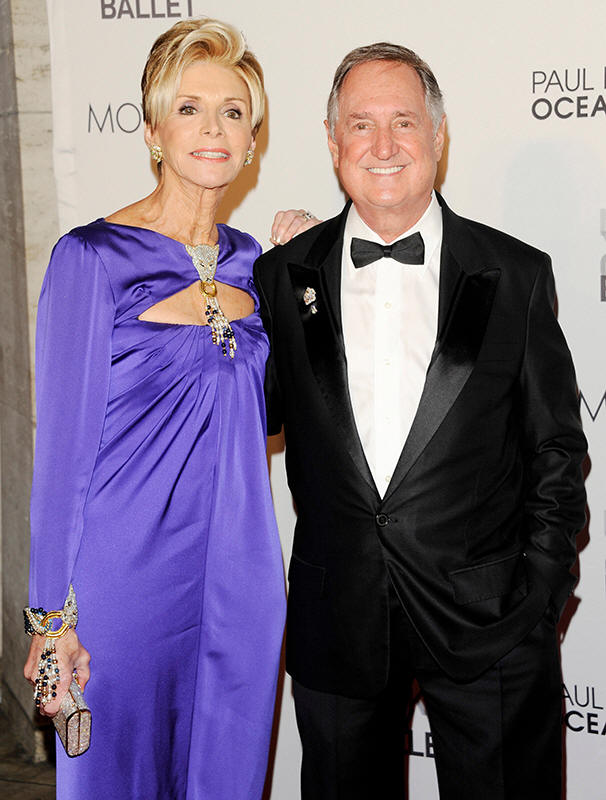
Neil Sedaka, the singer-songwriter behind dozens of hits of the 1960s
and '70s, dies at age 86
[February 28, 2026]
By LEANNE ITALIE
NEW YORK (AP) — Neil Sedaka, the hit-making singer-songwriter whose
boyish soprano and bright melodies made him a top act in the early years
of rock ‘n' roll and led to a second run of success in the 1970s, has
died.
Sedaka, whose hits included “Breaking Up Is Hard to Do” and “Laughter in
the Rain,” died Friday at age 86.
“Our family is devastated by the sudden passing of our beloved husband,
father and grandfather, Neil Sedaka,” his family said in a statement. “A
true rock and roll legend, an inspiration to millions, but most
importantly, at least to those of us who were lucky enough to know him,
an incredible human being who will be deeply missed.”
No other details of his death were immediately available.
A key member of the Brill Building songwriting factory, Sedaka teamed
with lyricist and boyhood neighbor Howard Greenfield on songs that
reflected the teen innocence of the post-Elvis, pre-Beatles era of the
late 1950 and early 1960s, including “Happy Birthday Sweet Sixteen,”
“Calendar Girl” and “Oh! Carol,” a lament for his high school
sweetheart, Carole King.
After a long dry spell, he reemerged with such smashes as “Laughter in
the Rain” and “Bad Blood.” The Captain & Tennille's cover of his “Love
Will Keep Us Together” was a chart-topper in 1975.
Short and dark-haired, with a big smile and high-pitched voice, he was a
Juilliard-trained, Brooklyn-born son of a Jewish taxi driver who began
performing as a teen and kept at it for decades.
Sedaka still played dozens of concerts a year well into his 80s. He
retained the enthusiasm and broad vocal range of his youth and never
tired of the standards he had sung hundreds of times.
“Past 70, Pavarotti told me the vocal cords are not what they used to
be. I’m very fortunate that my voice has held,” he told The Associated
Press in 2012. “It’s nice to be a legend, but it’s better to be a
working legend.”

Sedaka’s songs sold millions worldwide and have been covered by a range
of performers, from Elvis Presley and Frank Sinatra to The 5th Dimension
and Nickelback. Sedaka helped propel the career of Connie Francis with
“Stupid Cupid” and “Where the Boys Are,” the latter for the soundtrack
of the movie with the same name. The Captain & Tennille received a
best-album Grammy thanks largely to “Love Will Keep Us Together” and
included a nod to Sedaka at the end of the song, when Toni Tennille
exclaimed “Sedaka’s back!”
Growing up in Brooklyn, loving performing
Sedaka grew up in Brooklyn’s Brighton Beach neighborhood, pampered by
his grandparents, aunts and mother in a two-bedroom apartment he shared
with 11 relatives. He has a street there named in his honor, Neil Sedaka
Way.
But his music compensated for his unpopularity as a kid, he once
recalled. His talent was recognized by a second-grade teacher who urged
his homemaker mother, Eleanor, to buy him a piano. She went to work in a
department store to pay for a secondhand upright and managed his career
for years, as did his wife, Leba.
Sedaka loved songwriting and never quit, but he craved performing.
“Once a performer, always a performer. It’s that adrenaline rush. It’s
like a natural high when you’re in front of an audience, and if you get
that standing ovation, it’s infectious,” he told the AP.
At 16, Sedaka was chosen by Arthur Rubenstein in a contest as the city’s
best high school piano student and performed on a classical radio
station as a prize. It was the same year he discovered rock ‘n’ roll,
when he performed a song, “Mr. Moon,” he had written with Greenfield,
his classmate at Abraham Lincoln High School.

“I sang it in the auditorium for a ballyhoo show and I remember there
was a bit of a riot. The kids were jumping and screaming,” Sedaka said.
“After that I was able to go into the sweet shop with the tough kids
with the leather jackets.”
[to top of second column]
|
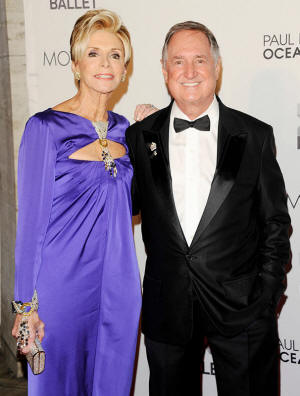
Composer Neil Sedaka, and his wife, Leba Sedaka, attend the New York
City Ballet's gala opening night of Paul McCartney's "Ocean's
Kingdom" on Thursday, Sept. 22, 2011 in New York. (AP Photo/Evan
Agostini, File)
 After high school, and then
Julliard, Sedaka and Greenfield were signed to Don Kirshner’s Aldon
Music, where they scored their first hit with Francis, “Stupid
Cupid.”
Sedaka churns out hits, until the Beatles
In 1958, at age 19, Sedaka signed with RCA Victor Records and his
first single, “The Diary,” enjoyed modest success. He began touring
and promoting his songs through regular TV appearances on Dick
Clark’s “American Bandstand” and “Shindig!”
At the Brill Building, Sedaka and Greenfield were joined by other
up-and-coming writers and lyricists including Neil Diamond, Paul
Simon and King.
“Neil Sedaka was so talented, and he inspired me to follow my dream
of being a songwriter,” King said on her Facebook page Friday. “With
love and gratitude and condolences to his family.”
Micky Dolenz of the Monkees also paid tribute to Sedaka, saying on
Instagram that he was “one of those rare songwriters who could do it
all.”
From 1959 to 1962, Sedaka had 10 records in the Top 10, including
“Calendar Girl,” “Oh! Carol,” “Happy Birthday Sweet Sixteen” and
“Next Door to an Angel.” But in the mid-1960s, the Brill Building
sound, influenced by the doo-wop groups of the New York City
streets, was pushed off the charts by the Beatles -led British
Invasion and the psychedelic and protest music that followed. Sedaka
would endure 13 years “in the wilderness,” as he described it to the
AP.
Sedaka's unlikely comeback, with help from Elton John
Sedaka was among the lucky, however, enjoying a renaissance that
began in the mid-’70s thanks to the patronage of Elton John, whom he
met at a party after Sedaka moved his wife and two kids to England
to take advantage of his lingering popularity there. John signed him
to his fledgling, U.S.-based Rocket Records label, providing him a
chance at more hits with the album “Sedaka’s Back.”
At Rocket, Sedaka and a new writing partner, Philip Cody, topped
charts with “Bad Blood” and the joyous “Laughter in the Rain.” He
also achieved a rare feat with “Breaking Up Is Hard to Do.” His
original up-tempo version went No. 1 in 1962. He rerecorded it as a
slow ballad in 1975 and that, too, went No. 1.
He recorded five albums from 1972 to 1976. They included hits
“Standing on the Inside,” “That’s Where the Music Takes Me” and “Our
Last Song Together,” about his breakup with Greenfield, with whom he
began writing songs when Sedaka was only 13 and Greenfield 16.
He was inducted into the Songwriters Hall of Fame, but the Rock &
Roll Hall of Fame eluded him despite a fan petition drive.
Sedaka married wife Leba in 1962. They had two children. Daughter
Dara recorded a duet with dad in 1980, “Should’ve Never Let You Go.”
It was a hit, but she never joined him in the music business. Son
Marc is a film and television writer.
___
AP Entertainment Writers Mark Kennedy in New York and Andrew Dalton
in Los Angeles contributed. Leanne Italie, the principal writer of
this story, retired in January.
All contents © copyright 2026 Associated Press. All rights reserved |