Fewer Americans sign up for Affordable Care Act health insurance as
costs spike
[January 14, 2026]
By ALI SWENSON and NICKY FORSTER
NEW YORK (AP) — Fewer Americans are signing up for Affordable Care Act
health insurance plans this year, new federal data shows, as expiring
subsidies and other factors push health expenses too high for many to
manage.
Nationally, around 800,000 fewer people have selected plans compared to
a similar time last year, marking a 3.5% drop in total enrollment so
far. That includes a decrease in both new consumers signing up for ACA
plans and existing enrollees re-upping them.
The new data released Monday evening by the Centers for Medicare and
Medicaid Services is only a snapshot of a continuously changing pool of
enrollees. It includes sign-ups through Jan. 3 in states that use
Healthcare.gov for ACA plans and through Dec. 27 for states that have
their own ACA marketplaces. In most states, the period for shopping for
plans continues through Jan. 15 for plans that start in February.
But even though it’s early, the data builds on fears that expiring
enhanced tax credits could cause a dip in enrollment and force many
Americans to make tough decisions to delay buying health insurance, look
for alternatives or forgo it entirely.
Experts warn that the number of people who have signed up for plans may
still drop even further, as enrollees get their first bill in January
and some choose to cancel.

Health care costs at the center of a fight in Congress
The declining enrollment comes as Congress has been locked in a partisan
battle over what to do about the subsidies that expired at the start of
the new year. For months, Democrats have fought for a straight extension
of the tax credits, while Republicans have insisted larger reforms are a
better way to root out fraud and abuse and keep costs down overall. Last
week, in a remarkable rebuke of Republican leadership, the House passed
legislation to extend the subsidies for three years. The bill now sits
in the Senate, where pressure is building for a bipartisan compromise.
Up until this year, President Barack Obama's landmark health insurance
program had been an increasingly popular option for Americans who don't
get health coverage through their jobs, including small business owners,
gig workers, farmers, ranchers and others.
For the 2021 plan year, about 12 million people selected an Affordable
Care Act plan. Enhanced tax credits were introduced the following year
and four years later enrollment had doubled to over 24 million.
[to top of second column]
|
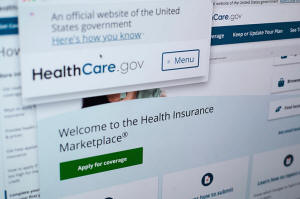
Pages from the U.S. Affordable Care Act health insurance website
healthcare.gov are seen on a computer screen in New York, Aug. 19,
2025. (AP Photo/Patrick Sison, File)
 This year’s sinking sign-ups —
sitting at about 22.8 million so far — mark the first time in the
past four years that enrollment has been down from the previous year
at this point in the shopping window.
The loss of enhanced subsidies means annual premium costs will more
than double for the average ACA enrollee who had them, according to
the health care research nonprofit KFF. But extending the subsidies
would also be expensive for the country. Ahead of last week's House
vote, the nonpartisan Congressional Budget Office estimated that
extending the subsidies for three years would increase the nation's
deficit by about $80.6 billion over the decade.
Americans begin looking for other options
Robert Kaestner, a health economist at the University of Chicago,
said some of those who abandon ACA plans may have other options,
such as going on a partner's employer health plan or changing their
income to qualify for Medicaid. Others will go without insurance at
least temporarily while they look for alternatives.
“My prediction is 2 million more people will lack health insurance
for a while," Kaestner said. "That's a serious issue, but
Republicans would argue we're using government money more
efficiently, we're targeting people who really need it and we're
saving $35 billion a year.”
Several Americans interviewed by The Associated Press have said
they're dropping coverage altogether for 2026 and will pay out of
pocket for needed appointments. Many said they are crossing their
fingers that they aren't affected by a costly injury or diagnosis.

“I'm pretty much going to be going without health insurance unless
they do something,” said 52-year-old Felicia Persaud, a Florida
entrepreneur who dropped coverage when she saw her monthly ACA costs
were set to increase by about $200 per month. “It's sort of like
playing poker and hoping the chips fall and try the best that you
can."
All contents © copyright 2026 Associated Press. All rights reserved |