|
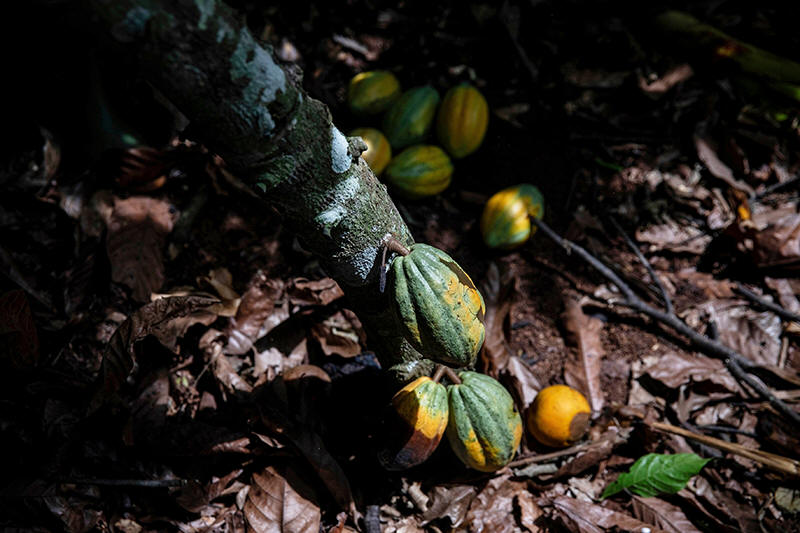
Synapci, the Ivory Coast's main cocoa farmers’ union, estimates
that 700,000 tons of cocoa remain unsold and therefore unpaid.
Some farmers, deprived of income for nearly two months, have
been forced to sell their stock at a discount or destroy rotten
cocoa, plunging them into severe hardship.
“We want to reassure them,” Agriculture Minister Kobenan Kouassi
Adjoumani told reporters on Tuesday. “The situation is now under
control, and collection operations will begin in the coming
days,” he said.
Adjoumani said the government would purchase unsold cocoa stocks
at the guaranteed seasonal price.
Cocoa is traded on a regulated, global market. In Ivory Coast —
which produces between 2 million and 2.5 million metric tons of
cocoa annually, almost half the world’s cocoa supply — the
government usually sets cocoa prices at the start of each
season, with prices reflecting market trends and global prices.
Unlike most African countries, Ivory Coast's government controls
cocoa sales through the Coffee and Cocoa Council to protect
farmers from price swings. About 85% of the harvest is sold in
advance at a fixed price, guaranteeing farmers a stable income.
In 2024 cocoa prices reached record highs. In October 2025, the
council set the price at a record level — roughly $5,000 per
metric ton — raising hopes ahead of the country's presidential
election. But global prices have since fallen to around $4,630
per metric ton. Multinational buyers have refused to purchase
the remaining 15% of cocoa, leading the government to step in
and buy the unsold stocks.
The government's announcement failed to convince Moussa Koné,
president of Synapci. “They are making nice promises, but what
guarantees are they offering?” he said. “And what about those
who have already had to throw away cocoa that rotted because of
the blockade?”
The new purchase price for the mid-crop season, due to be
announced on April 1, is expected to fall sharply.
All contents © copyright 2026 Associated Press. All rights reserved

|
|