ComEd files $15.3 billion grid plan proposal addressing rising demand
[January 24, 2026]
By Maggie Dougherty
CHICAGO — Electric utility Commonwealth Edison has asked regulators to
review a $15.3 billion, four-year grid plan that it says will help meet
growing energy demand and protect infrastructure from severe weather
events.
The filing is part of the state’s grid planning process laid out in the
Climate and Equitable Jobs Act, a landmark decarbonization bill that
passed in 2021. It details the technology and infrastructure investments
ComEd hopes to make from 2028 to 2031 to promote grid reliability.
But the plan will not be without a cost to ratepayers, and the consumer
advocates who successfully championed a reduction to ComEd’s initial
plan in 2023 are already pushing back against this year’s filing. It
will undergo an 11-month review by the state’s utility regulator, the
Illinois Commerce Commission.
If the investments proposed are approved in full by the ICC, ComEd
expects residential customers to see an increased average cost of
between $2.50 to $3 per month starting in 2028.
This would be separate from delivery rate increases, including a $243
million rate increase approved by the ICC in December that raised bills
for its customers by a little over $3 per month. ComEd delivers
electricity to over 4 million customers in northern Illinois.
The company says the plan is intended to account for increased energy
demand from electric vehicles, data centers and more people choosing to
heat their homes with electric heat rather than natural gas. The plan is
also meant to accommodate new interconnections for renewable energy
sources as consumer demand for solar increases.

“I’ve been in this industry about 22, 23 years, and I’ve never seen the
amount of change that we are experiencing right now,” said Melissa
Washington, senior vice president of customer operations at ComEd. “Most
of the pace of change that we’re seeing has come about in the last three
years and it’s continued to grow.”
The plan also doesn’t prevent ComEd from filing a standard rate request
in future years. Company officials say they expect to file a new rate
request in January 2027 that, if approved, would go into effect in
January 2028 — the same year as the grid plan investments are expected
to start.
Regulatory framework
CEJA’s 2021 passage required the state’s major electric utilities to
prepare grid plans that outline how they will integrate new renewable
energy resources and meet decarbonization requirements while
prioritizing affordability, especially for low-income communities.
ComEd filed its first four-year grid plan request in 2023, but the ICC
sent it back after deciding the company had failed to meet the standards
set under CEJA. The company refiled a slimmed down spending plan the
following year, and the commission ultimately approved a version that
reduced spending on system improvements by about 25%, according to the
commission.
ComEd President and Chief Executive Officer Gil Quiniones said the
company learned a lot from the process of filing and refiling its first
grid plan.
“We’ve applied all of the learnings from those experiences to this one,
and we are confident that we’re putting a plan that is in alignment with
the statute but also in alignment with the expectations of the
commission,” Quiniones said.
Utility watchdog and consumer advocacy groups, however, expect to fight
for similar reductions to this proposed plan. While most agree that some
investment is needed, they argue it is not necessary now and could be
implemented over coming years instead.
The Citizens Utility Board, an independent utility watchdog created by
the Illinois legislature, said its lawyers are reviewing the filing to
identify and push back on any “wasteful, inefficient and unnecessary
spending.” The latest filing is over 800 pages.
“CUB is disappointed to see ComEd come in with another bloated,
expensive grid plan,” CUB Executive Director Sarah Moskowitz wrote in a
statement. “Everyone supports a strong distribution system, but ComEd
has a responsibility to maintain its grid in a way that benefits
customers and doesn’t bankrupt them.”

[to top of second column]
|
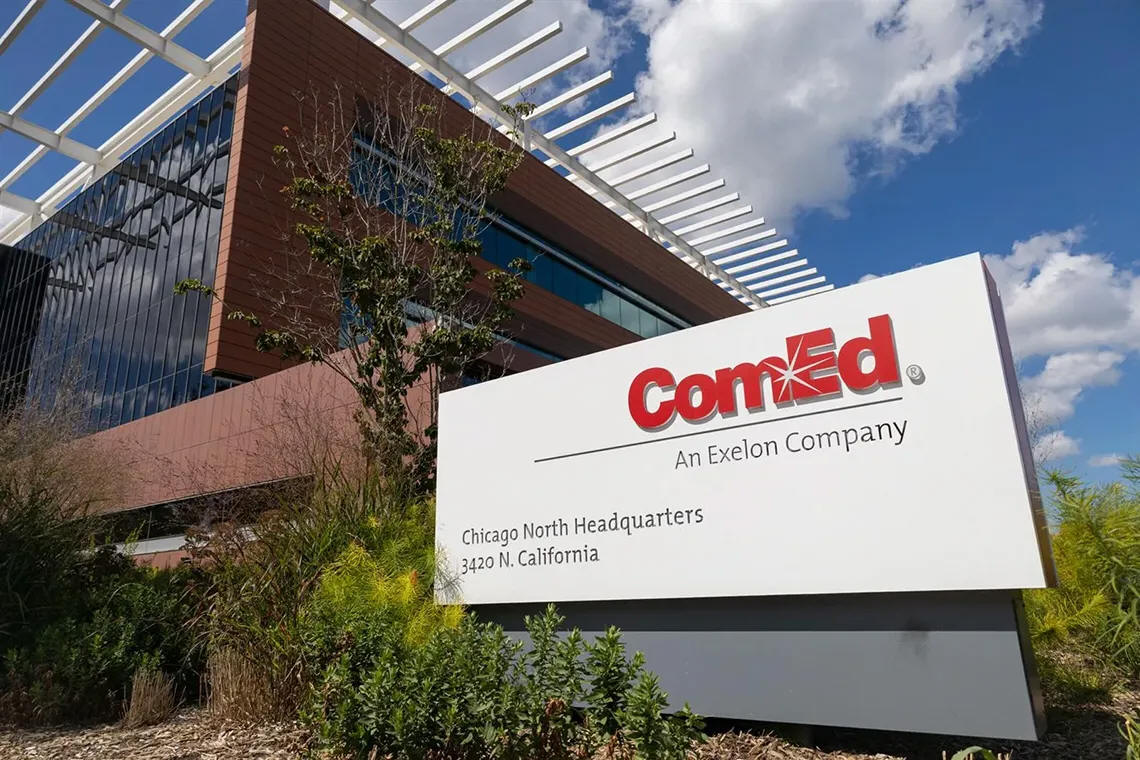
The headquarters of Commonwealth Edison, one of the state’s largest
utilities, is pictured in Chicago. (Capitol News Illinois file photo
by Andrew Adams)

CUB will have the opportunity to submit testimony to the ICC
opposing the grid plan, as will the attorney general’s office,
environmental advocates and other stakeholders.
Increased energy demand
ComEd says the planned investments will allow the company to respond
to increased consumer demand for electricity caused by factors
ranging from electrification of homes to data centers and artificial
intelligence. Energy demand also grew in part due to increased
electric vehicle demand as the state tries to reach its goal of one
million registered electric vehicles by 2030.
Over a third of the planned spending would support system
reliability, including preventative maintenance and replacement of
aging equipment, according to the filing. The plan also outlines
investments in grid management, customer operations, new business
and facility relocation and information technology architecture.
The plan proposes installation of three new substations across
Chicago and two elsewhere in northern Illinois, while also adding
new capacity at more than 70 of its substations. Substations are a
part of the electricity transmission and distribution system that
are key to lowering voltage to safe and usable levels before it
enters homes and businesses.
In its filing, ComEd said it experienced higher demand primarily
concentrated around 55 of its substations. Data center energy needs
accounted for over 47% of that new substation demand, according to
the filing.
The ICC and Federal Energy Regulatory Commission are currently
reviewing separate proceedings filed by ComEd last year that would
require high energy-use applicants like data centers to make a
financial commitment to meet certain transmission service
thresholds. The company says this is designed to ensure that the
cost of upgrades made to accommodate electricity use by those users
is not passed on to other customers.
The attorney general’s office filed objections to the FERC request,
writing that the proposed agreements fail to adequately protect
other customers.
Gov. JB Pritzker recently signed the Clean and Reliable Grid
Affordability Act into law, setting new requirements for battery
storage and so-called “virtual power plants.” Senior ComEd officials
said the grid plan factored in some of those elements but
acknowledged it might need adjustments as they learn more about the
law.

Affordability
Affordability and cost efficiency are key requirements under CEJA.
To be considered affordable, electricity costs must not account for
more than 3% of average household income, or 6% for those who heat
their homes with electricity.
Under the plan, average residential customers would devote 1.41% of
their household income to electricity in 2028, up from 1.23% in
2026. By the third year of the plan, it would grow to 1.48%, which
the company says is still lower than the national average of around
3%. ComEd said the average bill for its customers is currently
around $106 per month.
CEJA also requires that at least 40% of grid modernization and clean
energy investments benefit communities that have historically faced
exclusion from economic opportunities or have faced disproportionate
environmental burdens from pollution. ComEd estimates that 1.7
million customers, or approximately 42% of its customer base, fall
within that classification, according to the filing.
Capitol News Illinois is
a nonprofit, nonpartisan news service that distributes state
government coverage to hundreds of news outlets statewide. It is
funded primarily by the Illinois Press Foundation and the Robert R.
McCormick Foundation. |