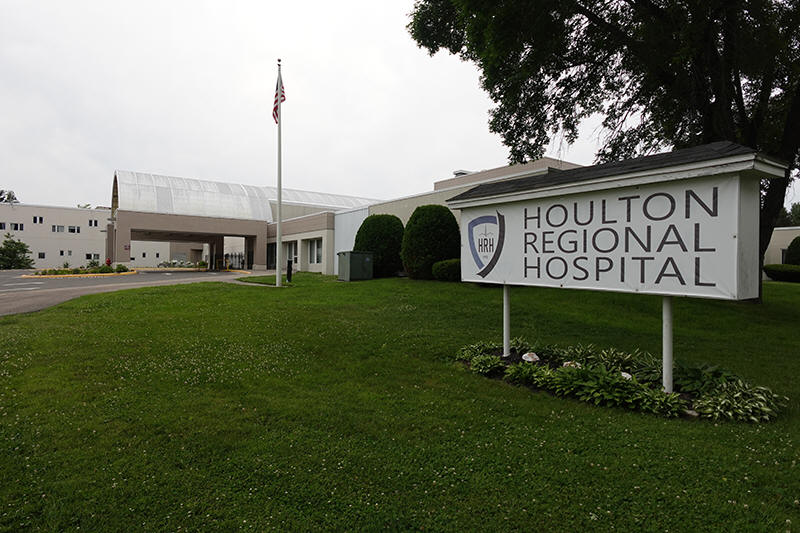
Her labor turned dangerous. The closest hospital had just stopped
delivering babies.
[January 27, 2026]
By EMILY HEDEGARD/The Maine Monitor
In the early hours of the morning on June 1, 2025, Katie Gowell went
into labor at her home in Patten, a town on the outskirts of Maine’s
northern wilderness containing Mount Katahdin, where her family doctor
was prepared to deliver her fifth child.
Shortly after her water burst, a complication arose: she had a prolapsed
umbilical cord, a medical emergency that can cut off the baby’s oxygen
supply.
Her physician, Dr. Rose Fuchs, quickly intervened to keep the blood
flowing and called for an ambulance.
Fuchs needed to hold Gowell’s umbilical cord in a particular position to
keep the baby alive, so when emergency personnel arrived the two of them
were put on a gurney together, with Fuchs crouching between her
patient’s legs. The crew had trouble maneuvering through the house’s
narrow, twisting hallways.
Once inside the ambulance, the pair couldn’t be strapped down with the
normal belts, and a paramedic had to occasionally grab Fuchs by the
waistband so she wouldn’t fall off as they went around a curve. It was a
bumpy ride, and she needed to keep her hand still or risk killing the
baby.
Then there was the question of where they were headed. The closest
hospital, Houlton Regional Hospital, was a 40-minute drive away — but it
had stopped delivering babies a month ago.
When it announced the closure of its maternity unit, the hospital said
it would remain prepared to take emergency births. But when Fuchs’ nurse
and paramedics called for help with Gowell’s emergency, the initial
answer was no. They wanted her to go to Northern Light Eastern Maine
Medical Center in Bangor.

“We were with the ambulance trying to figure out where to go. They
wanted to divert us to Houlton Airport to have LifeFlight pick us up,
but LifeFlight wasn’t sure they could fly because it was stormy that day
and raining,” Fuchs recalled. “I was arguing, debating, pleading with
the hospital and EMS — no, we’re going to Houlton.”
On May 2, the hospital in Houlton had become the 11th in Maine to shut
down its birthing unit in the past decade, part of a growing rural
maternal health crisis that has left half of Maine’s 34 hospitals
without obstetric services.
The closure — which the hospital said was necessary because of a decline
in births, staffing challenges and increasing financial pressures —
means the closest hospital maternity units are now in Presque Isle or
Bangor, both about an hour-and-a-half drive from Patten, population
approximately 900.
For many families in the area, the idea of going to Presque Isle or
Bangor for maternity care is daunting, particularly in the winter. When
complications arise, a mother may be hospitalized for weeks, separated
from her family. Some women have no one to call, no child care, and no
way to take time off work to make the hours-long trip for prenatal or
postpartum appointments — a gap that raises the risk of complications
before, during and after pregnancy.
‘A painful decision’
The hospital’s decision, which followed similar announcements from three
other hospitals in rural Maine earlier in the year, was announced April
3, 2025, a month before the closure.
“This is a painful decision for us and was not made lightly. It is
something that we have been grappling with for some time,” the hospital
wrote in an announcement on Facebook. “Over the past several years, like
many rural hospitals in Maine and across the nation, we have watched our
Labor and Delivery Unit volume steadily decline, and although our nurses
and our providers have gone above and beyond to maintain this service,
our volumes are making it impossible to do so.”
Houlton Regional Hospital’s chief operating officer, Gina Brown,
informed the Maine Department of Health and Human Services of its plans
to close the maternity unit just one day before the public was informed
and 30 days before the closure, according to a letter The Maine Monitor
obtained through a records request.

Hospitals are not required to get approval from the state before
terminating a service, but DHHS policy asks that hospitals provide the
agency with 120 days’ notice before a permanent change, so the agency
can monitor maternity and newborn care across the state. (Notification
is currently voluntary, but a commission that reviewed health care
regulations recently recommended that lawmakers make it mandatory,
according to the commission’s December report.)
In the letter to the state, Brown noted a “steady decline in
deliveries,” which dropped from 115 in 2020 to 83 in 2024, along with an
“inability to recruit experienced professionals, which raises concerns
for quality and safety.”
The letter also noted that “a recent independent review confirms that
the closure would benefit the hospital’s overall financial health.”
Houlton Regional Hospital representatives, including Brown, did not
respond to six requests for an interview sent between June 2025 and this
January, including a list of detailed questions sent in December.
The hospital’s decision was met with shock and anger. On April 9, 2025,
hundreds of nurses, providers and community members packed the Millar
Civic Center in Houlton for a town meeting about the closure hosted by
the Houlton labor and delivery nurses, where residents shared traumatic
birth stories that could have ended differently without Houlton’s
maternity unit. “Support Our Nurses” signs popped up on lawns across the
community, and more than a thousand people signed an online petition to
keep the maternity unit open.
Katherine Scott, then six months pregnant, said that the closure was
heartbreaking for her and her family. She and her husband were both born
and raised in Houlton. Their 5-year-old son had been delivered at
Houlton Regional by the same physician who had delivered Katherine — the
same physician who was scheduled to deliver her second child.
After the closure, Scott was one of several patients transferred to
Northern Light A.R. Gould Hospital in Presque Isle. Of the 40 patients
scheduled to give birth in Houlton between May 2 and November, more than
half were transferred to A.R. Gould in Presque Isle, with others
switching to Northern Light Eastern Maine Medical Center in Bangor, Cary
Medical Center in Caribou and MaineGeneral Medical Center in Augusta.

Scott ultimately chose to be induced, as she feared a natural birth
would be dangerous given the distance between her home and the hospital.
“We lost that small-town connection with our providers,” Scott said. “It
was extremely heartbreaking and detrimental for us to have to come up
with a new plan being that far along in my pregnancy.”
She said she received good care in Presque Isle but could tell the
maternity department was “inundated” with new patients.
The Presque Isle hospital’s average deliveries in 2025 rose from about
14 per month between February and May to 26 per month in June and July,
according to data provided by Northern Light Health, nearly doubling
after Houlton stopped deliveries.
‘Every day I worry’
Nurses said they were blindsided by the closure and learned about it
only hours before the notice became public. The meeting where hospital
leaders informed the nurses was “very abrupt,” said Jayme Hovey, a
former obstetric nurse at Houlton Regional who resigned following the
announcement.
Brown, the hospital’s COO, was “in and out in less than five minutes,”
Hovey said. The nurses remained in the room for more than an hour, many
in tears.
Seeking answers, the nurses hand-delivered letters to the hospital’s
board members, requesting a discussion about the closure. The board
declined.
“To be completely disregarded by the people who we thought were watching
out over the hospital was devastating,” said Angela Davis, a former
obstetrics nurse at Houlton Regional who left her position following the
announcement. “I wasn’t looking for them to overturn it. I knew that
probably wasn’t going to happen. I wanted them to say, ‘We hear you. We
are also concerned about the women and children.’”
On April 16, the nurses held the discussion anyway. In a 10-minute film
posted to Facebook, seven nurses asked a panel of empty chairs about
protocol for emergency births. They were met with silence as the camera
slowly panned to rows of name cards, unopened water bottles and empty
chairs. As question after question about emergency birth protocols went
unanswered, nurses repeated one word: “Death.”

After Houlton announced its closure, hospital staff met with officials
from Maine Emergency Medical Services, LifeFlight of Maine, and the
hospitals in Presque Isle and Bangor. A transcript of that April 22
meeting, obtained by The Monitor, shows that participants discussed
dispersing labor and delivery equipment to the Houlton emergency room
and training staff to handle emergency births.
[to top of second column]
|
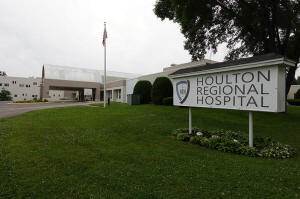
Houlton Regional Hospital closed its labor and delivery unit on May
2, 2025, in Houlton, Maine, citing a decline in births, staffing
challenges and increasing financial pressures. (Emily Hedegard/The
Maine Monitor via AP)
 They raised concerns about the costs
of transferring high-risk patients and gaps in EMS training. They
also questioned how some populations, such as the region’s Amish
families, who tend to use horses and buggies for travel, would reach
hospitals now at least an hour away by car.
According to the meeting minutes, the chief nursing officer said the
Amish community was “very tight-knit” and had “developed connections
in the community with people who can get them where they need to
go.”
But Alta Kauffmann, an Amish midwife, questioned this. While most
Amish women do not give birth in a hospital, one to two a month
typically require hospital assistance, she told The Monitor.
Non-Amish neighbors often helped bring emergency cases to the
hospital in Houlton, she said, but those informal arrangements might
not be reliable during time-sensitive emergencies.
“It’s true that we’re close knit, but when we need help outside the
community, we need it,” Kaufmann said. “What are we going to do?
Where are we going to go when we have an emergency? Are we going to
push our way into the hospital and hope that they know what to do —
or risk going a lot farther?”
“It’s just a very insecure feeling, because we have no backup plan,”
she said.
Meanwhile, nurses such as Davis said the system is unprepared.
“Every day I worry about moms and babies,” she said, tearing up.
“Every day I tell myself we’re doing the best we can, but it just
doesn’t feel like it. Who’s going to look at that mom and say, ‘Our
system failed you’ when something horrible happens?”
‘Your hometown hospital’
Fuchs, who fought to get her pregnant patient into the hospital in
Houlton, has seen the impact of the closure at her office in Patten,
Cornerstone Family Practice. She works out of a converted house
whose waiting room has floral wallpaper, a bay window and a corner
full of colorful toys. It’s just her and two staff members, a nurse
and a nurse aide, and they’re overwhelmed.
“We have a waiting list of more than seven pages, single space
lines, and we stopped taking names. People call every day trying to
be a patient here because it’s such a dearth of primary care in the
area,” said Fuchs, whose practice is capped at 900 patients.

Fuchs has assisted with two emergency births since the maternity
unit closed. One patient, she said, ended up giving birth at her
practice because the Houlton hospital was closed, and Bangor was too
far.
“It was going fast,” she recalled. She delivered the baby at her
clinic and then brought the child to Houlton herself for pediatric
care. She said both the mother and baby are doing well, but it was a
stressful ordeal that would have gone differently had the maternity
unit still been open.
“I wouldn’t have been tested to my limit,” she said.
The other emergency involved Katie Gowell, who had the prolapsed
umbilical cord.
Though she had been planning on a home birth, Gowell said learning
of Houlton Regional’s maternity unit closure was “pretty
disturbing.” She had gone to the hospital to give birth to her first
three children before deciding to have her fourth at home during the
pandemic. With her fifth being due shortly after the closure, she
recalled wondering where she would go if something bad happened.
That question played out on June 1.
After a hectic back and forth in the ambulance, Fuchs said, the
hospital agreed to perform an emergency Cesarean section using
obstetric staff who had been kept on call during the transition
period. The hospital called in an OB-GYN doctor normally based in
Augusta who was staying at Ivey’s Motor Lodge in Houlton, and a
couple of obstetrics nurses from home, Fuchs recalled.
The on-call team moved fast. Fuchs remained on the gurney with
Gowell, on her hands and knees, pinching Gowell’s cord, she said. By
the time they were in the operating room, 90 minutes had passed, and
it was critical to get the baby out as quickly as possible. Hospital
staff poured an antiseptic over Fuchs and draped a sterile sheet
across her back. They then placed their tools on her back.
“To give you an idea of how far beyond protocol this goes,” said
Fuchs, “speed was so much of the essence that we don’t care if dirty
me in street clothes — I have not scrubbed into surgery — is now
becoming your surgical table.”

Gowell gave birth to Brooklyn Rose June Gowell, whose middle name
was chosen to honor the doctor who saved her life, just before 8
a.m. on June 1.
“Without those special people,” Gowell said, “my baby would have
died.”
Though both Brooklyn and her mother were stable, a helicopter
brought the baby to Bangor, while an ambulance took her mom, because
the Houlton hospital said it did not have a place to put them — a
decision Fuchs said she did not understand, and one that prompted
MaineCare to foot a bill that struck her as “an unnecessary use of
resources.”
Gowell spent the ambulance ride to Bangor hoping her experience
might convince Houlton to bring back its labor and delivery unit,
she recalled. That hasn’t happened.
Now, seven months later, her daughter — her “miracle baby,” as she
described her — is doing well, Gowell said in a January interview.
But she still worries about what the closure will mean for other
women in the area, whether they need emergency care or regular
prenatal appointments.
“We need to take care of our people. We can’t just keep closing down
rural Maine,” she said, noting that even those who wish to give
birth at home want the option of a hospital and advanced care
nearby.
This realization is part of what prompted her to tell her story and
to let Fuchs speak out about it as well.
“Honestly, before this birth, I wouldn’t have been as concerned
because everything has always gone smoothly,” she said. “If I was to
get pregnant again, I would be worried.”
Since the closure, Fuchs said she has seen an increase in the number
of patients interested in giving birth at home, as well as patients
choosing to be induced to avoid an emergency.
She has also had to assist Amish midwives with more complex cases.
In one, a patient had a liver condition that required consistent
treatment; another involved a blood issue that could have been
fatal.
“Normally they wouldn’t have come to me,” she said, explaining that
they would have gone to an OB-GYN at Houlton. “But instead they’re
seeing if I can handle it.”

She was able to treat the liver condition with medication and lab
monitoring, she said. The other case was too complex, but she was
able to get the mother into Northern Light Eastern Maine Medical
Center in Bangor, though she said it was a slow process given how
busy its staff had become.
“Everything is well that ends well. Those children are all born now
and still living and fine,” Fuchs said. “But talk about stress for
those of us who take care of these patients.”
Recently, she got a flier in the mail from Houlton Regional Hospital
with an announcement: “Your Hometown Hospital. Growing for You. New
Specialists. New Services. New Reasons to Stay Close to Home for
Your Care.”
The flier listed several new specialty services — cardiology,
behavioral health, obesity management, orthopedics, urology, pain
management — as well as expanded primary care options and “advancing
technology” such as a CT scanner and ultrasound machine.
“We’re proud to grow alongside the people we serve — bringing
advanced, compassionate care to the place we all call home,” it
announced.
Fuchs said she is grateful for the new offerings. But the flier left
her with a question: “Why can’t we put OB on that list?”
___
Deputy Editor Stephanie McFeeters contributed reporting.
All contents © copyright 2026 Associated Press. All rights reserved |