Federal Reserve keeps interest rates unchanged even as Trump continues
to insist they be lowered
[January 29, 2026] By
CHRISTOPHER RUGABER
WASHINGTON (AP) — The Federal Reserve pushed the pause button on its
interest rate cuts Wednesday, leaving its key rate unchanged at about
3.6% after lowering it three times last year.
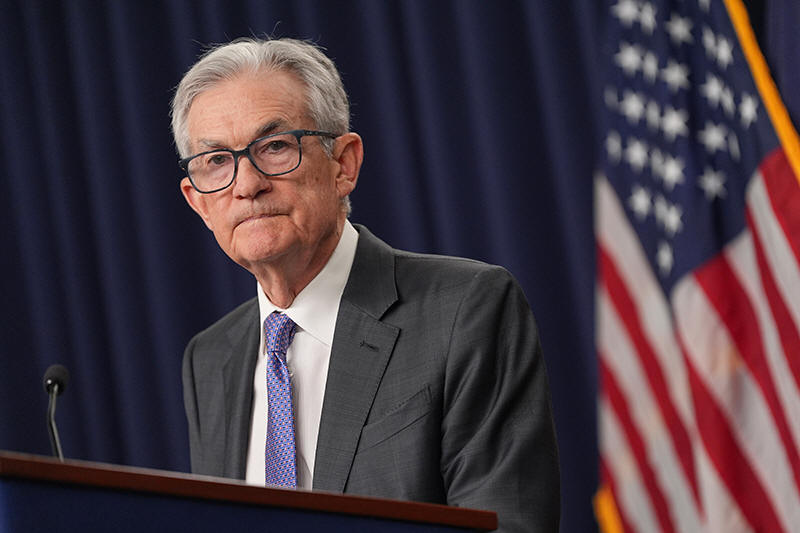
Chair Jerome Powell said at a news conference after the central bank
announced its decision that the economy's outlook “has clearly improved
since the last meeting” in December, a development that he noted should
boost hiring over time. The Fed also said in a statement that there were
signs the job market is stabilizing.
With the economy growing at a healthy pace and the unemployment rate
appearing to level off, Fed officials likely see little reason to rush
any further rate cuts. While most policymakers do expect to reduce
borrowing costs further this year, many want to see evidence that
stubbornly-elevated inflation is moving closer to the central bank’s
target of 2%. According to the Fed’s preferred measure, inflation was
2.8% in November, slightly higher than a year ago.
Michael Gapen, chief U.S. economist at Morgan Stanley, said that Powell
kept the door open for further rate cuts this year, “when they get
enough evidence inflation is decelerating.” Powell suggested in his
remarks that the impact of tariffs, which have pushed up the cost of
many goods such as furniture, appliances and toys, will peak in the
middle of this year and inflation will fall after that.
In a sign of the unprecedented situation in which the Fed finds itself
in Trump’s second term, Powell was asked to address a number of issues
not directly tied to monetary policy but that could very well decide how
the Fed implements its policy going forward.

Two officials dissented from Wednesday's decision, with Governors
Stephen Miran and Christopher Waller preferring another quarter-point
reduction. President Donald Trump appointed Miran in September, and he
had dissented at the three previous meetings in favor of a half-point
cut. Waller is under consideration by the White House to replace Powell,
whose term ends in May.
The Fed’s decision to stand pat will likely fuel further criticism from
Trump, who has relentlessly assailed Powell for not sharply cutting
short-term rates. A reduction in the Fed's key rate tends to lower
borrowing costs for things like mortgages, car loans, and business
borrowing, though those rates are also influenced by market forces.
A key issue facing the Fed is how long it will remain on hold. The
rate-setting committee has been split between those officials opposed to
further cuts until inflation comes down, and those who want to lower
rates to further support hiring.
Powell suggested that there may not be that many more rate cuts needed.
The economy's solid 4.4% annual growth rate in the July-September
quarter, the most recent data available, is a sign that interest rates
aren't so high that they are noticeably slowing growth, he added.
In December, just 12 of the 19 participants in the committee's meetings
supported at least one more rate cut this year. Most economists forecast
the Fed will cut twice this year, most likely at the June meeting or
later.
One issue still overhanging the Fed's decision-making is the
administration's trade policy and the tariffs it has imposed on many
U.S. trade partners. When asked if the impact of tariffs had already
moved through inflation, Powell said “a lot of it has,” and added that
the Fed generally sees the import taxes as a one-time price increase.
“The expectation is that we will see the effects of tariffs flowing
through goods prices peaking and then starting to come down, assuming
there are no new major tariff increases,” Powell said.
Fed officials met this week in the shadow of unprecedented pressure from
the Trump White House. Powell said Jan. 11 that the Fed had received
subpoenas from the Justice Department as part of a criminal
investigation into his congressional testimony about a $2.5 billion
building renovation. Powell in an unusually blunt video statement said
the subpoenas were a pretext to punish the Fed for not cutting rates
more quickly.

[to top of second column] |
Federal Reserve Chair Jerome Powell speaks at the Federal Reserve,
Wednesday, Dec. 10, 2025, in Washington. (AP Photo/Jacquelyn Martin,
file)
 On Wednesday, Powell declined to add
anything to that earlier statement.
And last week, the Supreme Court took up Trump's attempt from last
year to fire Fed governor Lisa Cook over allegations of mortgage
fraud, which she denies. No president has fired a governor in the
Fed’s 112-year history. The justices at an oral argument appeared to
be leaning toward allowing her to stay in her job until the case is
resolved.
When asked why he decided to attend the Supreme Court hearing,
Powell said, “I would say that that this case is perhaps the most
important legal case" in the Fed’s history. "And as I thought about
it, I thought, it might be hard to explain why I didn’t attend.”
When asked by reporters if he was confident the Fed can retain its
independence, Powell said, “Yes,” and added, “I’m strongly committed
to that and so are my colleagues.”
Trump has suggested he is close to naming a new Fed Chair, to
replace Powell once his term ends in May. The announcement could
come as soon as this week, though it has been delayed before.
The president’s efforts to pressure the Fed may have backfired,
economists say, as Republicans in the Senate have voiced support for
Powell and threatened to block Trump’s replacement chair.
Powell has the option of remaining as a Fed governor beyond May but
told reporters he hadn’t made a decision about whether to stay or
leave.
The chair was also asked if he had any advice for his successor.
“Don’t get involved in elected politics," he said. “Don’t do it.”
As for interest rates, Wall Street expected the Fed to hold steady
at least until June.
Twelve of the 19 members of the Fed's rate-setting committee have a
vote, including all seven members of the board of governors, the
president of the New York Fed, and a rotating group of four
presidents from the regional Fed banks.

This year, Beth Hammack, president of the Cleveland Fed; Neel
Kashkari, president of the Minneapolis Fed; Lorie Logan, president
of the Dallas Fed; and Anna Paulson, president of the Philadelphia
Fed, will vote on rate decisions. All have recently expressed some
skepticism of the need for further cuts in the immediate future.
With businesses barely adding jobs, consumers remain gloomy about
the economy. The Conference Board's measure of consumer confidence
dropped to an 11-year low in January, the business research group
said Tuesday.
Powell noted that while consumers are pessimistic in surveys, they
are still spending at a healthy pace, helping propel the economy.
"The economy has once again surprised us with its strength," Powell
said. “Consumer spending, although it’s uneven across income
categories, (the) overall numbers are good.”
___
Associated Press Writers Josh Boak and Ken Sweet in New York
contributed to this report.
All contents © copyright 2026 Associated Press. All rights reserved |