What to know about postpartum psychosis, which can affect a new mom's
sense of reality
[July 29, 2026]
By LAURA UNGAR
A key question in a Massachusetts murder trial is whether postpartum
psychosis drove a mother to kill her three children.
On Monday, a jury heard opening statements in the trial of Lindsay
Clancy, a former labor and delivery nurse at Massachusetts General
Hospital. Both sides agree she strangled her children aged 5 and younger
in 2023. But they disagree over whether she should be held criminally
responsible.
Clancy and her ex-husband, Patrick Clancy, filed lawsuits accusing her
medical providers of failing to properly diagnose and treat her
condition.
Here’s what to know about the disorder.
Postpartum psychosis is rare and dangerous
It's estimated to afflict only 1 to 2 per 1,000 women after delivery.
Experts at the Cleveland Clinic describe it as a mental health emergency
affecting someone’s sense of reality.
It can happen to anyone after giving birth, but the chances are higher
for people with certain mental health conditions. In a journal article
on the subject in 2023, researchers at the Medical University of Lublin
in Poland said about half of people with postpartum psychosis have a
previous history of psychiatric problems and the most common risk factor
associated with the condition is bipolar affective disorder, which
causes extreme mood swings.
Though most people with postpartum psychosis don’t harm their children,
mothers with severe cases may try to do so, and also may try to harm
themselves.
Experts say it’s important to seek immediate help if you or your partner
or family member show signs of postpartum psychosis.
Signs of postpartum psychosis
Postpartum psychosis usually happens within several days of giving birth
but can occur up to six weeks afterwards.
Symptoms may include hallucinations, delusions, paranoia or other
behavior changes.
A woman may also have mood changes, such as mania or depression,
disorganized thinking or behavior, insomnia, irritability or agitation.
[to top of second column]
|

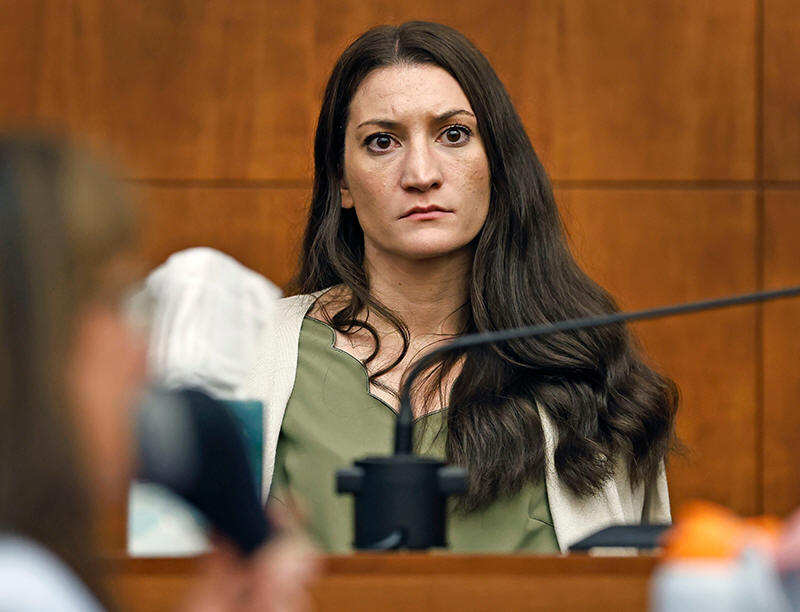
Lindsay Clancy waits for the judge to call a prospective jury member
into court in her murder trial where she is charged in the 2023
killing of her three children, Wednesday, July 22, 2026, in Plymouth
Superior Court in Plymouth, Mass. (Greg Derr/The Patriot Ledger via
AP, Pool)
 It’s not the same as postpartum
depression or baby blues
Postpartum depression is a mood disorder that can also be dangerous
but is much more common. One 2024 study found that U.S. rates
reached 19% in 2021. Baby blues is a lot milder and affects about 8
in 10 new moms shortly after delivery.
With baby blues, crying jags and feelings of sadness aren’t enough
to interfere with normal life and moms should still be able to care
for themselves and their babies.
If sadness lingers for more than two weeks, that can be a sign of
postpartum depression. Other signs include intense feelings of
despair, anxiety, loss of interest, feelings of guilt and
worthlessness, low energy and decreased concentration and appetite.
Moms may worry constantly about their babies, be unable to sleep, or
stop showering for days. They may even have thoughts of harming
themselves.
Postpartum psychosis is the most severe postpartum psychiatric
illness.
Treatment for postpartum psychosis
Moms with the condition need inpatient mental healthcare, which can
include involuntary hospitalization. Treatments include medications
or electroconvulsive therapy, a procedure done under anesthesia in
which small electric currents pass through the brain, intentionally
causing a brief seizure.
Experts say getting help early increases the odds of a good outcome.
___
The Associated Press Health and Science Department receives support
from the Howard Hughes Medical Institute’s Department of Science
Education and the Robert Wood Johnson Foundation. The AP is solely
responsible for all content.
All contents © copyright 2026 Associated Press. All rights reserved |