Director Carl Rinsch is sentenced to prison in $11M fraud case over
unfinished Netflix show
[June 30, 2026]
By JENNIFER PELTZ
NEW YORK (AP) — Hollywood writer-director Carl Rinsch was sentenced
Monday to 2 1/2 years in prison after being convicted of defrauding
Netflix out of $11 million for a never-finished sci-fi series.
Supporters including Keanu Reeves had asked the court to show him
leniency.
Rinsch, best known for the 2013 samurai fantasy film “47 Ronin,” was
convicted in December of federal wire fraud and other charges. According
to prosecutors and trial testimony, he told Netflix he needed $11
million to finish a show called “White Horse” but diverted the money
into a personal account and ultimately spent whopping sums on luxury
cars, watches, clothes and household goods, including $638,000 on two
mattresses.
Rinsch, 48, and his lawyers told the court Monday that his behavior was
fueled by mental health struggles and medication problems, which they
said he is now addressing with a new care provider.
“This process has forced me to confront things about my health, my
judgment and my life,” Rinsch said. He apologized for his behavior,
acknowledged that “real harm was caused,” and explained: “I failed to
recognize the danger of the state I was in.”
His psychological troubles weren't described in court, and he and his
lawyers declined to detail them afterward.
Prosecutors argued that Rinsch —- who also owes about $11 million in
restitution — should serve five years in prison.

“Mr. Rinsch had every possible advantage,” including family money, an
elite education, famous friends and a high-flying career, prosecutor
David Markewitz told the court. Rinsch's motive, the prosecutor said,
“was naked greed.”
Rinsch, who also has used the name Carl Erik Rinsch professionally,
hails from the Los Angeles area and began making short films as a
teenager. He later directed commercials, then got attention for “47
Ronin,” which stars Reeves. His character leads outcast samurai seeking
to avenge their master's killing.
Rinsch “bring exceptional joy and warmth to the people around him” and
“creative inspiration to others through his creativity and vision,”
Reeves told the court in a letter ahead of Rinsch's sentencing.
The “Matrix” star said he didn't know the details of the case, but he
acknowledged that Rinsch “can self-sabotage by amplifying the scale,
scope and landscape of what had been negotiated.” He said he hoped the
director’s sentence “might be tempered with measures of leniency and
mercy as well as justice.”
[to top of second column]
|
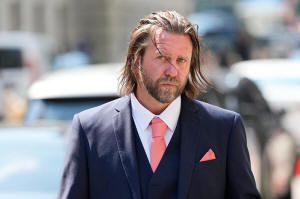
Carl Rinsch leaves a federal courthouse in New York, Monday, June
29, 2026. (AP Photo/Seth Wenig)
 Prosecutors said Netflix initially
paid Rinsch about $44 million for “White Horse” in 2018 and 2019,
then provided another $11 million in 2020 after he said he needed
more money to wrap up production.
But instead of putting that money toward the show, Rinsch steered
the cash to a personal account and made a series of failed
investments, losing around half the $11 million in a couple of
months, according to prosecutors and witnesses' testimony.
They said he put the remaining funds into the cryptocurrency market,
netting some profit, which Rinsch deposited into his own bank
account.
Then came the lavish purchases, prosecutors said, with Rinsch buying
five Rolls-Royces, a red Ferrari, $652,000 worth of watches and
clothes, and the pricey mattresses, plus another $295,000 on luxury
bedding and linens. In addition, he used some of the money to pay
off about $1.8 million in credit card bills, prosecutors said.
U.S. District Judge Jed S. Rakoff said Rinsch's mental health
difficulties “may explain some of the excesses” but don't “detract
from the court's conclusion that he was determined to lie to get
substantial monies from Netflix, lie to cover it up.”
As Rakoff announced the prison term, Rinsch wrote on a piece of
paper on a table in front of him. One of his lawyers, Benjamin Zeman,
patted the director's back.
After court, Rinsch — who's due to report to prison in September —
hugged several people who had come to support him. He and his
lawyers declined to comment as they left, except that attorney
Daniel McGuinness said they looked forward to appealing the case.
Netflix declined to comment on his sentence.
___
Associated Press writer Michael R. Sisak contributed.
All contents © copyright 2026 Associated Press. All rights reserved
 |