FDA panel on peptides will include experts who promote the unproven
chemicals favored by RFK Jr.
[June 30, 2026]
By MATTHEW PERRONE
WASHINGTON (AP) — When U.S. health officials meet next month to
reconsider a list of controversial peptide drugs, they will hear from a
new set of voices: doctors and pharmacists with deep financial ties to
the burgeoning industry of unproven chemicals.
The Food and Drug Administration on Monday released its list of
participants for an upcoming meeting to reconsider the safety and
effectiveness of several popular peptide injections, including some that
have been praised by Health Secretary Robert F. Kennedy Jr.
Previous FDA panels on the topic have been composed of academics and
researchers. The agency’s new group mainly includes health professionals
who prescribe, produce or promote peptides, which have become a wellness
trend among athletes, influencers and celebrities.
The two-day meeting is the latest example of how Kennedy and his
deputies are trying to reshape U.S. health policy in the mold of the
Make America Healthy Again movement. Some of the biggest supporters of
the movement sell peptide formulas, though many pharmaceutical industry
experts consider them illegal, unapproved drugs.
The substances are sold online and promoted by wellness clinics as a
means to build muscle, heal injuries and look younger, though there’s
little evidence behind those claims. Peptide sellers often skirt U.S.
regulations by labeling their products as "for research use only,” since
the FDA doesn’t regulate research chemicals.

FDA has raised safety concerns about peptides
Many of the injectable peptides sold in the U.S. are produced by
compounding pharmacies, which mix custom medications that aren’t
available from traditional drug manufacturers.
For several years, the FDA has warned Americans about the risks of
injecting chemicals with names like BPC-157 and TB-500, which have not
been extensively studied in humans. Both drugs are considered doping
substances by international sports authorities. They are among seven
peptides set for review in July.
Previous versions of the FDA’s panel on drug compounding — the group
that will meet next month — have voted against a string of peptide
ingredients brought forward by compounding pharmacies, declaring all of
them too risky to be offered to patients. Those panels were mostly
composed of experts from universities including Duke, Harvard and Johns
Hopkins.
New FDA panel includes peptide proponents
The FDA's new group includes more than a half-dozen panelists who run
clinics, online businesses or pharmacies specializing in peptides, which
are often given alongside other unapproved therapies, including vitamin
infusions.
For example, panel member Dr. Haleem Mohammed runs clinics in Florida
that sell injections of peptides, vitamins, testosterone and weight loss
medications. The business is part of a national chain of clinics dubbed
Gameday Men's Health. The company's website states, "compounded
medications offered through our services are not FDA-approved, and the
FDA does not verify their safety."
Another panelist, Dr. Gabriel Alizaidy, charges $500 for “peptide and
hormone” consultations, including advice on “where to safely get each
peptide or compound.” Alizaidy promotes BPC-157, GHK-Cu and other
peptides to thousands of followers through his accounts on Instagram and
TikTok.
His website contains the disclaimer that each consultation “is
educational in nature and does not constitute medical care, diagnosis,
or treatment.”
Another member is Bobby Harshbarger, a Tennessee state senator who has
multiple connections to the industry. Harshbarger is a pharmacist at his
family's business, Premiere Pharmacy, which sells compounded medications
for weight loss, longevity, pain and other conditions.
[to top of second column]
|
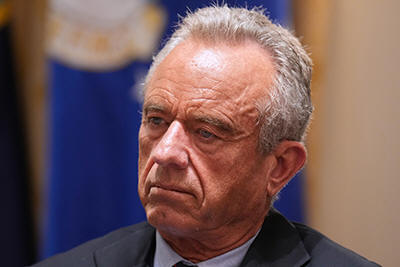
Secretary of Health and Human Services Robert F. Kennedy Jr.,
listens during a Cabinet meeting at the White House, May 27, 2026,
in Washington. (AP Photo/Jacquelyn Martin, File)
 His mother, Rep. Diana Harshbarger,
is also a pharmacist and a Republican member of U.S. Congress from
Tennessee. Last year she sent a letter to Kennedy calling on him to
relax FDA restrictions on a half-dozen peptides.
President Donald Trump has repeatedly praised Harshbarger's support
of his “Make America Great Again” agenda. Last year, the president
pardoned her husband, Robert Harshbarger Jr., who pleaded guilty
more than a decade ago to substituting an unapproved drug from China
for one used by patients on kidney dialysis. He was stripped of his
pharmacy license and sentenced to four years in prison, which he
served.
Mohammed and Alizaidy did not immediately respond to messages from
The Associated Press Monday afternoon. A spokesperson for
Harshbarger could not immediately provide comment when reached by
phone.
Kennedy and his allies previously criticized government panels
The FDA has more than 30 panels of experts who advise the agency on
various drugs, vaccines, food ingredients and other products.
Advisory meetings are subject to strict government transparency
rules in terms of panel composition and financial disclosures.
Experts who have a financial stake in a company or industry are
permitted to serve on the panels, but the relationship must be
disclosed and regulators are supposed to explain why the person's
expertise outweighs their potential conflict of interest.
Kennedy and his allies have been highly critical of federal expert
panels, often alleging that they are riven with conflicts of
interest, despite federal data showing otherwise.
Last year, Kennedy fired the Centers for Disease Control and
Prevention's entire 17-member vaccine panel and replaced it with a
group that includes several anti-vaccine voices. A federal judge
later said that action likely violated federal rules.
Kennedy told podcast host Joe Rogan earlier this year that he is “a
big fan of peptides,” and described using them to recover from
injuries.

Former FDA Commissioner Marty Makary — who resigned in May — was
also highly critical of FDA advisory panels, complaining that they
were expensive, time-consuming and subject to too many financial
conflicts.
The number of such meetings plummeted during Makary's tenure.
Instead, the FDA held a number of ad hoc meetings with handpicked
experts on topics favored by Kennedy, including the risks of talc
powder and antidepressants.
___
The Associated Press Health and Science Department receives support
from the Howard Hughes Medical Institute’s Department of Science
Education and the Robert Wood Johnson Foundation. The AP is solely
responsible for all content.
All contents © copyright 2026 Associated Press. All rights reserved
 |