Flu vaccines didn't work that well in the US, officials find
[March 14, 2026]
By MIKE STOBBE
NEW YORK (AP) — As the U.S. flu season winds down, health officials say
the flu vaccine didn't work very well, with one of its worst
effectiveness rates in more than a decade.
A new strain that dominated the early winter was not well matched to the
vaccine, leading to an intense early onslaught of flu.
The Centers for Disease Control and Prevention on Friday posted data
that showed a continued decline in doctor's office and hospital visits
for flu symptoms through last week. The number of states reporting high
flu activity dropped to 16, many of them in a belt stretching from
Colorado to Virginia.
“The winter respiratory virus season is slowly coming to a close, and
we’re all very grateful for that,” said Dr. William Schaffner, a
Vanderbilt University vaccine expert.
This season's vaccines were around 25% to 30% effective in preventing
adults from getting sick enough from the flu that they had to go to a
doctor’s office, clinic or hospital, according to a CDC report this
week. Children who were vaccinated were about 40% less likely to get
treatment at a doctor’s office or hospital.
Officials generally are pleased if a flu vaccine is 40% to 60%
effective. Judging from past CDC research, this season saw one of the
lowest effectiveness rates in the last two decades.

Flu infections surged in late December and were especially intense in
some parts of the country. New York City health officials called it the
most intense season in 20 years.
Relatively low flu vaccination rates did not help, but experts also
blamed the new flu strain that was causing most infections.
The new strain belonged to a category of flu virus, called A H3N2. This
new version, subclade K, seemed to spread more easily — though it did
not necessarily cause more severe illness.
The vaccine available for this season was built to address a different
version of H3N2, and the new strain's explosion is a likely explanation
for why the vaccine was less effective, Schaffner said.
CDC scientists estimate there have been at least 27 million illnesses,
350,000 hospitalizations and 22,000 deaths from flu so far this season.
At the same point last year, the estimates were at least 40 million
illnesses, 520,000 hospitalizations, but about the same number of
deaths.
[to top of second column]
|

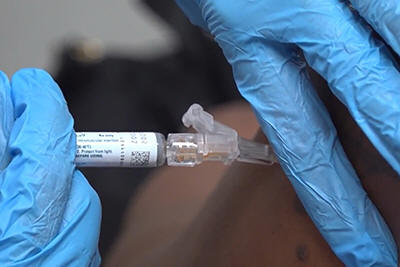
A pharmacist gives a patient a flu shot in Miami on Sept. 9, 2025.
(AP Photo/Daniel Kozin, File)
 At least 101 children have died so
far this season. For those whose vaccination status is known, about
85% were not fully vaccinated against flu.
The flu vaccine may not protect everyone from getting sick, but it
can prevent people from becoming severely ill and dying. That's why
getting a flu shot remains worthwhile, Schaffner said.
CDC data suggests adult vaccination rates are up slightly this
season, to 46.5%, following an unusually bad season last year that
set a record for the most child deaths this century.
An estimated 48% of U.S. kids were vaccinated against flu around the
end of last month. That's about the same as last year, but down from
the 52% vaccinated at this point in 2024, according to CDC data.
Starting in 2010, the government recommended annual flu vaccinations
for Americans 6 months and older. In January, however, the Trump
administration stopped broadly recommending flu shots for all
children, saying instead that it’s up to parents and family doctors
to decide.
Meanwhile, work is already underway for next winter’s flu season.
Last month, the World Health Organization announced its
recommendations for which virus strains to address in the vaccines
for the 2026-27 northern hemisphere flu season. The vaccines should
be built to handle subclade K, the organization said. This week, a
U.S. Food and Drug Administration advisory committee endorsed the
WHO recommendations.
___
The Associated Press Health and Science Department receives support
from the Howard Hughes Medical Institute’s Department of Science
Education and the Robert Wood Johnson Foundation. The AP is solely
responsible for all content.
All contents © copyright 2026 Associated Press. All rights reserved
 |