|
She said her mother, Solange Tremblay, had multiple fractures to
one leg and will need surgery but otherwise was OK. An aviation
safety expert said she likely was helped by being in a seat with
a four-point restraint used by crew members.
“I’m still trying to understand how all this happened,” Lepine
said, “but she definitely has a guardian angel watching over
her.”
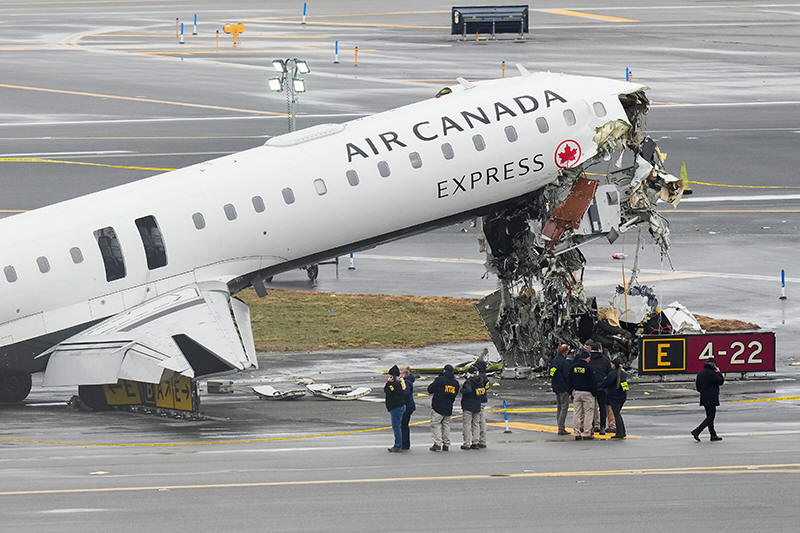
The jet, carrying more than 70 passengers, was landing when it
collided with a fire truck that was responding to a problem at
another plane Sunday night. The nose of the Air Canada plane was
destroyed, and the pilot and copilot were killed.
Aviation safety expert Jeff Guzzetti, too, called Tremblay’s
survival a miracle when “compared to the destruction of the nose
of the airplane.”
“The flight attendant’s seat is kind of a jump seat that folds
down and is bolted to the wall, the same wall that the cockpit
utilizes,” said Guzzetti, a former federal crash investigator.
“It’s a very robust seat,” he added. "It’s designed to withstand
probably more crash loads than passenger seats because you need
the flight attendant to help passengers get out of an airplane
after a crash.”
In 2013, at least two flight attendants were injured when they
were thrown from an Asiana Airlines flight that crashed into a
sea wall while landing at San Francisco International Airport.
There were 291 people aboard Asiana Flight 214, and three girls
were killed.
___
White reported from Detroit. Associated Press reporter Rebecca
Boone in Boise, Idaho, contributed to this story.
All contents © copyright 2026 Associated Press. All rights
reserved |
|