EPA approves sale of a higher-ethanol fuel to try to lower gas prices
[March 26, 2026] By
MELINA WALLING
The U.S. Environmental Protection Agency said Wednesday that it would
temporarily allow widespread sales of a higher ethanol gas blend in a
move that they hope will tamp down consumer prices that have soared
since the Iran war began.
The higher blend has been prohibited in warm weather because of concerns
it could worsen smog.
“President Trump is unleashing American Energy Dominance, and today’s
action will directly lower prices at the pump and gives a clear demand
signal to our domestic biofuels producers,” U.S. Agriculture Secretary
Brooke Rollins said in a statement.
The summer waiver for E15 has become commonplace in recent years, and
both Republicans and Democrats have called for it to become year-round
and permanent to lower prices at the pump. It's already allowed in some
states: Iowa, Illinois, Minnesota, Nebraska, Missouri, Wisconsin and
most of South Dakota, according to the Renewable Fuels Association, an
ethanol trade group. The association said it's also legal in cities that
require reformulated gasoline, or gasoline blended with the intent to
burn more cleanly.
In Kansas, Democratic Rep. Sharice Davids has requested and been granted
emergency waivers for E15 for several years, from EPA administrations
under presidents of both parties. This week U.S. Sen. Amy Klobuchar, a
Democrat from Minnesota, urged the Trump administration to take “a
no-cost, immediate step” to curb rising domestic fuel costs amid the
Iran war.
But not all are convinced the move will substantially lower gas prices.
E15 isn't available in all states and some places don't have the
necessary infrastructure or enough of a supply of ethanol to ramp up
use, said Kenneth Gillingham, a professor at the Yale School of the
Environment who studies the impacts of transportation regulations on
prices, emissions and consumer welfare.
Gillingham also said the higher levels of corrosive ethanol in E15 can
be a risk especially to older cars, boats and all-terrain vehicles.

[to top of second column] |
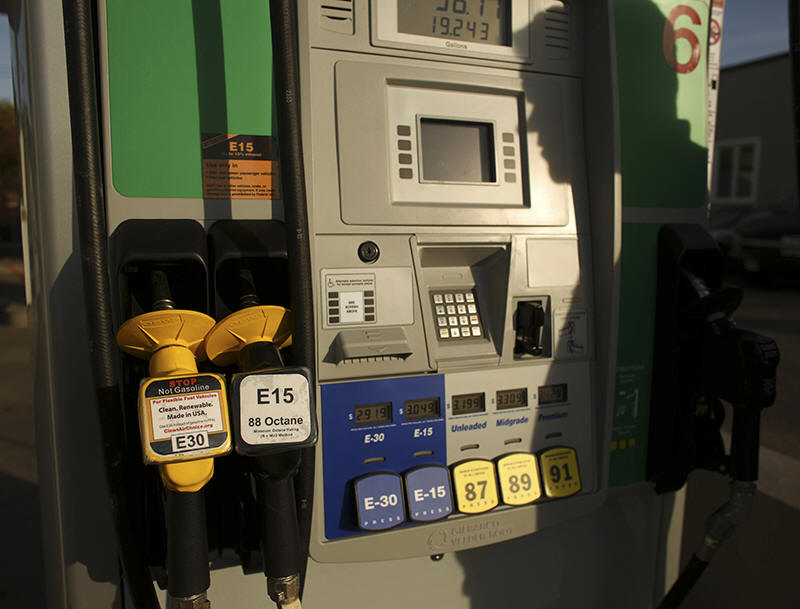
A shadow is reflected on new pumps at Rich Bohnen's service station
in Minneapolis on Oct. 28, 2013. (Jeff Wheeler/Minnesota Star
Tribune via AP)
 More corn used for ethanol also
means less can be used for animal feed, said Jason Hill, a professor
at the University of Minnesota who studies food, energy markets and
environmental consequences. That means consumers could be trading
lower costs at the pump for higher costs at the grocery store.
“I think it’s difficult to see when the ledger's settled, how this
is a benefit for U.S. consumers,” Hill said.
Hill said he thought the announcement was targeted more at farmers
hit hard by higher prices for the diesel they use to run their
equipment and by fertilizer price hikes caused by the Iran war. He
said similar announcements have been made before as a way to express
support for “agriculture and those who drive.”
Gillingham also said the move comes at a cost beyond economics.
”There’s more likely to be ozone issues in the summer and some
people will die," he said. “It will lead to some earlier heart
attacks and it will lead to some earlier respiratory issues that
wouldn’t have been the case otherwise.”
The oil industry has generally opposed expansion of E15, arguing
that biofuel blending is costly and raises gasoline prices. But a
vice president at the American Petroleum Institute wrote in a
statement that they supported this move. “By temporarily easing
summer fuel requirements, this action helps ensure American
consumers continue to have access to affordable, reliable energy,”
Will Hupman said.
All contents © copyright 2026 Associated Press. All rights reserved |