Woman whose son died from drugs bought on social media celebrates
verdicts against Meta, YouTube
[March 27, 2026] By
THOMAS PEIPERT and HANNAH SCHOENBAUM
THORNTON, Colo. (AP) — A Colorado woman whose son died from a
fentanyl-laced pill he bought through social media celebrated a pair of
verdicts this week against Meta and YouTube that she said opened the
door for companies to be held responsible for harms to children using
their platforms.
“The truth is out, and it’s time that they are held accountable for the
design of the platforms,” said Kimberly Osterman, whose son Max died in
2021 at age 18. “They put profits over safety.”
Flipping through photo albums Thursday at her home in Colorado, Osterman
reflected on “the days before social media. The days before the infinite
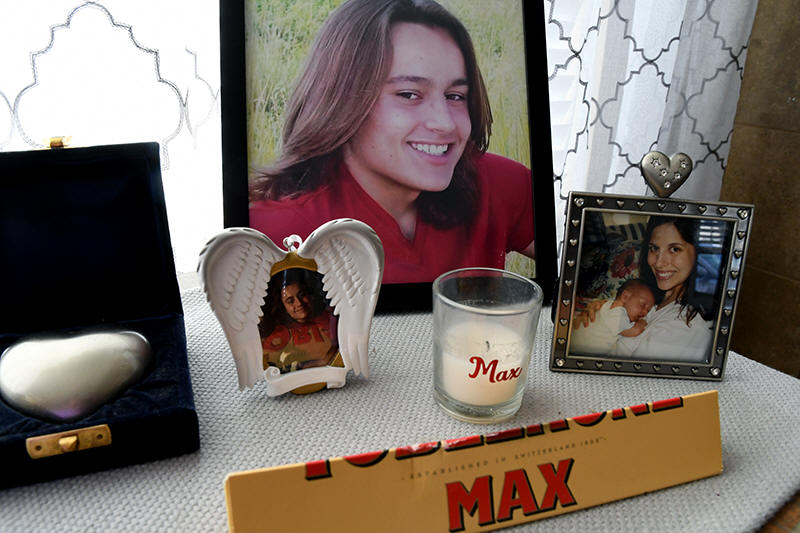
scrolling lured him in.” Photos of him in frames with hearts and angels
wings dotted the shelves.
Osterman said Max arranged to meet a drug dealer he connected with on
Snapchat and purchased what he thought was Percocet. The pill was laced
with a deadly dose of fentanyl, and he was dead the next morning.
Osterman is pursuing a wrongful death lawsuit that is separate from
cases decided this week.
In Los Angeles on Wednesday, a jury found both YouTube and Meta, which
owns and operates platforms including Instagram and Facebook, liable for
harms to children for designing their platforms to hook young users. The
companies said they disagreed with the verdicts and may appeal.

And in New Mexico, a jury determined that Meta knowingly harmed
children’s mental health and concealed what it knew about child sexual
exploitation on its platforms. Meta said it would appeal.
Snapchat’s parent company, Snap Inc., settled for an undisclosed sum in
January just before the Los Angeles trial began. TikTok also agreed to
settle, and details were not disclosed.
Osterman is part of Parents for Safe Online Spaces, or ParentsSOS, a
group that includes parents who have lost children to online harm and
advocate for more regulation. It has campaigned for the Kids Online
Safety Act, pending federal legislation that would require social media
platforms to take reasonable steps to prevent harm on platforms minors
are likely to use.
[to top of second column] |

A tribute to Max Osterman, whose mother says he died after taking
fentanyl he bought from a dealer on Snapchat, is displayed in his
mother's living room in Thornton, Colo., Thursday, March 26, 2026.
(AP Photo/Thomas Peipert)
 She hopes to see social media
companies enact strict guardrails, such as age verification
technology, to prevent anyone under 18 from accessing the platforms.
“You think your kids are safe in their home, in their bedroom, but
that's not the way it is with the current status of social media,”
she said.
Osterman knew Max used Snapchat to communicate with friends but did
not realize the danger he was in. She said he loved lacrosse and
wrestling and was academically brilliant.
The man who sold the pill to him, Sergio Guerra-Carrillo, was
sentenced to six years in prison on two distribution charges in
2023.
Snapchat did not immediately comment Thursday when asked about
Osterman's case. The company has said previously that it uses
cutting-edge technology to proactively find and shut down drug
dealers’ accounts and blocks search results for drug-related terms.
It is not yet clear whether the recent verdicts against the social
platforms will lead to major changes. But the verdicts demonstrate a
growing willingness to hold major social media companies responsible
and demand meaningful change. Tech watchdogs expect they will open
the door for more lawsuits and regulations.
___
Schoenbaum reported from Salt Lake City.
All contents © copyright 2026 Associated Press. All rights reserved
 |