Fuel shortages and high prices push adoption of EVs in Africa, led by
Ethiopia
[May 09, 2026] By
ALLAN OLINGO
Nairobi, KENYA (AP) — Use of electric vehicles in Africa is surging, led
by Ethiopia, as soaring prices and fuel shortages compel countries to
opt for cleaner and cheaper transport.
Africa imported 44,358 electric vehicles from China in 2025, according
to data from China’s Commerce Ministry, up from 19,386 in 2024. The
shipments, valued at over $200 million, highlight growing demand,
especially in Ethiopia after it banned new imports of gas and
diesel-powered vehicles in 2024.
More than 115,000 EVs are now on Ethiopia's roads, accounting for about
8% of the national fleet. In 2025, it imported a third of Africa’s
imports from China, ahead of other major markets in South Africa, Egypt,
Morocco and Nigeria.
As the Iran war drags on, Ethiopia’s fuel shortages are rippling through
transport systems and daily life, reinforcing its effort to cut costly
imports of oil and gas and strengthen its energy security. However that
trend is raising questions about charging infrastructure and
affordability.
Ethiopia’s spends about $4.2 billion on fuel imports annually, straining
its foreign currency reserves.
Its minister of Trade and Regional Integration, Kassahun Gofe, said in a
statement that the country also is spending up to $128 million monthly
on fuel subsidies, while shipments fell short by more than 180,000
metric tons as the imports are disrupted by Iran's effective closure of
the Strait of Hormuz, the shipping route for about a fifth of oil from
the Gulf region before the war.

The government has redoubled its campaign for quicker EV adoption,
framing it as a critical buffer against external supply shocks.
“From a general perspective, it is sustainable,” said Hiten Parmar,
executive director of South African- based The Electric Mission. “By
replacing imported fuel with domestically generated electricity,
Ethiopia is strengthening its energy security position.”
Ethiopia has an edge
Ethiopia has a special advantage in that more than 90% of its
electricity comes from renewable sources, mainly hydro and solar. The
Grand Ethiopian Renaissance Dam, Africa's largest hydroelectric project,
is expected to double its power generation, though the facility and has
fueled a decade-long dispute over water supplies with downstream Egypt
and Sudan.
“That scale of generation creates a foundation for electrified
transport,” Parmar said. “It allows EVs to be powered by locally
produced clean energy, rather than costly imports.”
“By gradually adopting EVs, that intensive fuel import expenditure can
be reduced and redirected into other critical development needs,” Parmar
said.
Globally, the International Energy Agency estimates electric vehicles
displaced more than 1 million barrels of oil consumption per day in
2024.
Countries across Africa are pushing for more EVs
Egypt, South Africa and Morocco also are pursuing a transition to EV
use, adopting a mix of policy incentives, investing in manufacturing
capacity and in clean energy.
“That transition is beginning to ease pressure on fuel demand,” said Bob
Wesonga, policy and investments lead at the Africa E-Mobility Alliance.
“That’s over 100,000 vehicle owners who are no longer directly exposed
to pump price shocks,” he said. “In the medium to long term, this
creates a buffer against global oil volatility.”
For those who have switched, the savings are significant.

[to top of second column] |
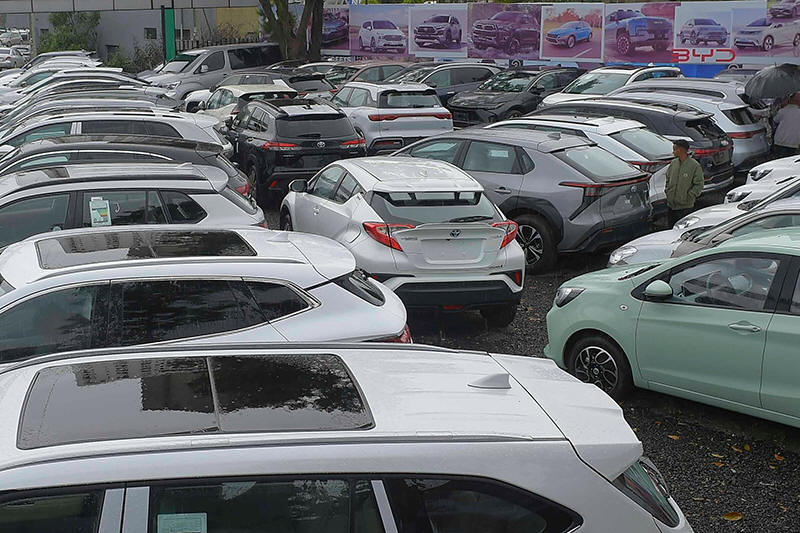
A batch of electrical vehicles for sale parked at a car yard in
Addis Ababa, Ethiopia on Oct. 3, 2024. (AP Photo, File)
 “A private EV owner now spends
roughly $4 a month on charging compared to about $27 previously
spent on fuel,” Wesonga said. “For public transport operators, the
difference is even more striking.”
Charging stations and other infrastructure are
still lacking
The transition to EVs faces some daunting structural hurdles, Parmar
notes.
“The technology is already mature, the challenge is building it out
fast enough,” he said.
Ethiopia is deploying ultra-fast charging hubs in its capital Addis
Ababa, but scaling them nationwide will take time and investment.
“The biggest hurdle is the last-mile power distribution,” Wesonga
said. “While Ethiopia has a surplus of generation, getting that
power reliably to where it’s needed, especially outside Addis Ababa,
remains a challenge.”
Frequent blackouts and delays in connecting high-capacity charging
stations have slowed construction of needed infrastructure, even as
demand for electric vehicles rises.
“Charging infrastructure is still heavily concentrated in the
capital and along a few corridors,” Wesonga said. “That limits
e-mobility to specific areas and creates a bottleneck as adoption
grows.”
Plans to assemble EVs raise question of affordability
Ethiopia is one of several countries in Africa looking to build
their own EV industries. Official data show 17 electric vehicle
assembly plants are in the pipeline in Ethiopia, with plans to raise
that number to 60 by 2030. It's part of a broader strategy to
localize production and reduce costs.
Affordability, however, remains a major constraint. While operating
costs are lower, prices of electric vehicles remain high relative to
average incomes.
“The purchase price is still out of reach for many,” Wesonga said.
“At the same time, restrictions on fossil fuel vehicles have pushed
up the cost of used cars, creating additional barriers.”
That dynamic could have unintended social impacts if not managed
carefully.
“A national fleet transition is always gradual,” Parmar said.
“Existing combustion vehicles will remain in use for some time, and
the transition needs to account for livelihoods tied to that
system.”

Even so, both experts say the long-term trajectory remains clear.
Lower operating and maintenance costs for electric vehicles could
reduce transport costs over time, easing the price of goods and
improving access to economic opportunities.
Ethiopia is also looking to lessons from countries such as China and
Norway, where policy support, infrastructure investment and consumer
incentives have driven rapid adoption.
“This is not just about transport,” Wesonga said. “It’s about
reshaping how the country uses energy, and who benefits from that
shift.”
All contents © copyright 2026 Associated Press. All rights reserved |