Bangor public health director reflects on conditions that escalated
Maine HIV outbreak
[May 12, 2026]
By ROSE LUNDY/The Maine Monitor
Penobscot County is grappling with Maine’s largest HIV outbreak in its
history. Looking back, the top public health official for the county
seat of Bangor described how the conditions existed for such an outbreak
and how it is now difficult to know the full scope.
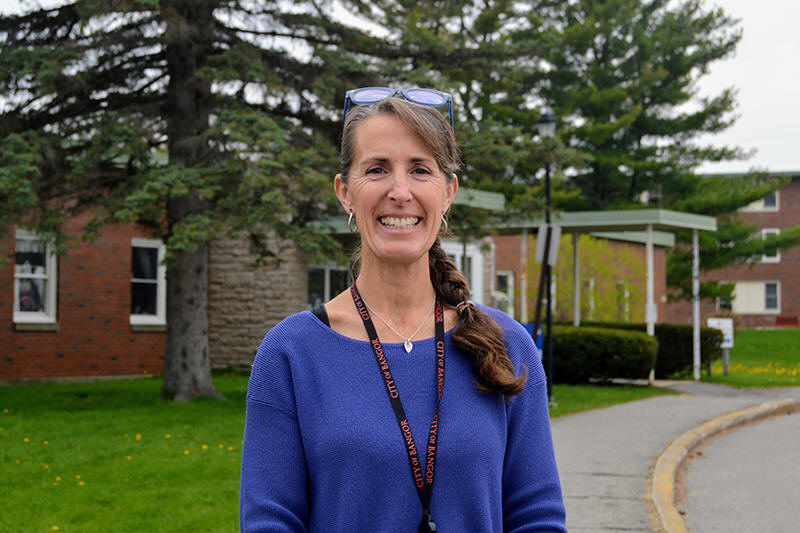
In a recent interview, Jennifer Gunderman, Bangor’s director of public
health and community services, said HIV had dropped off the radar in
Maine because the state has a low incidence of the disease, but then the
risk factors started piling up: increased homelessness, wide drug use,
disappearing syringe service providers and health care options, and
fewer case management providers.
The challenges that arose made it more likely that an outbreak would
balloon.
The first case in what was later determined to be a cluster was
identified in October 2023. A year and a half later, Penobscot County
had 21 confirmed cases. HIV is a virus that attacks the immune system
and, if untreated, can lead to AIDS. However, people can live long and
healthy lives with treatment.
In response to the outbreak, the state increased access to HIV and
hepatitis C virus testing among those at risk, provided HIV and sexually
transmitted infection prevention services, offered syringe services and
other harm reduction services, and linked people diagnosed with HIV or
hepatitis C to medical care and treatment.
The number of confirmed cases has still grown. As of April 24, Penobscot
County reported at least 41 cases of HIV cumulatively since the
outbreak’s start. Gunderman said the numbers are likely much bigger than
the state has been able to track. Historically over the past decade, all
of Maine usually saw fewer than 40 new HIV diagnoses each year.

The vast majority of known cases have been among people who are
injecting drugs and who are unhoused, but Gunderman said there are
likely additional cases among people who are housed and injecting drugs.
There is sex work happening for money, support or housing, which
increases the risk factors for spreading HIV, Gunderman said.
But it’s difficult to pin down just how many more cases could be out
there. The Maine Center for Disease Control and Prevention is working
with national experts to model the outbreak and try to answer that
question, Gunderman said.
“Epidemiologically speaking, where are we in the outbreak? We don’t know
until it’s over,” Gunderman said.
While the state leads the epidemiological investigation into the
outbreak, Gunderman said the outbreak has underscored the importance of
local public health work. The city’s public health department has
expanded testing for HIV and sexually transmitted infections,
distributed HIV self tests, and helped get people into housing. It has
also set up an HIV case management program to help people get rides to
appointments and apply for health insurance. In addition, the Bangor
City Council this week voted to allow the public health department to
apply for syringe service certification to give out sterile syringes to
clients with HIV.
Bangor, which has one of the state’s two city public health departments,
plans to use its experience to help other Maine communities that may
have fewer resources but face the same conditions that could lead to an
HIV outbreak, Gunderman said.
[to top of second column]
|
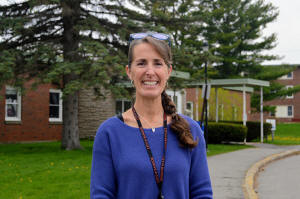
Jennifer Gunderman, director of Bangor Public Health and Community
Services, is pictured outside Bangor Public Health and Community
Services building in Bangor, Maine, on May 6, 2026. (Erin Rhoda/The
Maine Monitor via AP)
 “Now, it’s like how do we understand
those ingredients and see where other parts of the state might have
these ingredients?” she said. “(We’re) trying to to help those
communities increase testing, increase prevention messages, and
understand what could be going on in their community and how to
prevent an outbreak like we’re experiencing.”
Gunderman’s career in public health before joining the city in April
2024 gave her insight into a range of public health challenges. In
the late 1990s, Gunderman started working as an epidemiologist with
what is now the Maine CDC and was tasked with responding to a case
of mumps on her first day. She also collaborated with many
organizations focused on HIV and sexually transmitted diseases, and
she gained experience establishing and coordinating statewide
infectious disease surveillance.
Gunderman worked as the first public health liaison for the midcoast
public health district with the state CDC from 2008 to 2011. She has
also worked as an organic farmer and as a consultant providing
assistance on global HIV surveillance and data for federally funded
projects. She has taught public health and epidemiology at the
University of New England, the University of Vermont and the
University of Southern Maine.
Since she became director of Bangor’s public health department two
years ago, several key public health challenges have generated
scrutiny of the city, especially homelessness and drug use. The
solutions to homelessness are bigger than what the city alone can
accomplish and will require more than street medicine, emergency
shelters or housing voucher programs, Gunderman said. It will take
movement on many levels, with both short- and long-term solutions,
she said.
“There’s a lot of tension and friction that happens around these
conversations, but what I’m learning is that we all do have the same
goal here, (which is) being a healthy, happy community for
everybody,” she said.

The public health department responds to more than homelessness,
drug use and infection control. The department also offers maternal
mental health support, lactation programming and administers the
Women, Infants and Children (WIC) program. In addition, it hosts a
travel medicine clinic where people can get the required
immunizations for different countries and recently received a
$243,000 grant from the Peter and Carmen Lucia Buck Foundation to
launch a community paramedicine program.
“Oftentimes, people think a local health department is for the most
vulnerable of our community. That’s an important part of our work,
but our local health department is to serve everybody,” Gunderman
said.
All contents © copyright 2026 Associated Press. All rights reserved |