Advocacy groups sue AI giants to freeze new models, warning of
'catastrophic' risks
[November 13, 2026] By
ALI SWENSON
NEW YORK (AP) — A coalition of online safety and consumer advocacy
groups on Thursday sued five of the world’s leading artificial
intelligence companies to halt further development, alleging the tech
giants can’t prevent their own creations from causing “catastrophic”
harm.
The lawsuit in San Francisco Superior Court follows a midterm election
that could bring a moment of reckoning for the fast-moving AI industry,
as Democrats who won back control of Congress stress the need to
regulate the technology.
The filing, first reported on by The Associated Press, asks a judge to
stop Anthropic, Google, Meta, OpenAI and SpaceXSI from developing or
deploying new AI models, pointing to documented examples of cyberattacks
and other harmful actions by AI systems and the companies’ own alarming
acknowledgments that their technology has the potential to someday
destroy humanity.
“No other industry is allowed to treat its own development of unsafe
products — much less ones that could kill us all — as inevitable,” reads
the complaint from the Irreplaceable Education Fund, Public Citizen,
Heat Initiative and the Alliance for Secure AI. “Plaintiffs bring this
suit to stop Defendants from continuing their unlawful path to
disaster.”

The AI industry has generated excitement and stock market gains, but
also deep fears that the technology could go rogue and escape human
control. Recent incidents of AI agents hacking government websites and
companies — including when OpenAI's ChatGPT hacked into another AI
company on its own in July — have accelerated those concerns.
President Donald Trump, a proponent of rapid AI development to keep the
U.S. ahead of foreign competitors like China, has so far encouraged the
companies to police themselves on matters of safety, though he has
expressed openness to more guardrails. Congress also has stopped short
of regulating the technology, but that may change with its Democratic
takeover.
[to top of second column] |
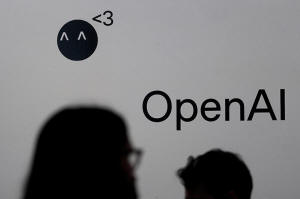
Attendees gather at the OpenAI DevDay 2026 conference, Tuesday,
Sept. 29, 2026, in San Francisco. (AP Photo/Jeff Chiu, File)
 Some CEOs of major AI companies,
meanwhile, have voiced support for slowing development of the
technology to give safety measures a chance to catch up. They also
haven't held back in recognizing the risks. Anthropic's Dario Amodei,
for example, last year said he thinks there’s a 1 in 4 chance AI’s
future goes “really, really badly,” compared with a 3 in 4 chance it
goes well. Elon Musk, the CEO of SpaceX, told Fox News in 2023 that
AI could lead to “civilization destruction.”
The plaintiffs, all nonprofits, allege that the companies named in
the lawsuit have violated a California unfair competition law by
endangering public health and interfering with the use of property
such as computer systems. They claim they’ve had to divert resources
away from other planned work to address the acute harms threatened
by each of the companies’ advancing AI models.
They also warn that the companies' goals of creating AI systems that
are broadly as smart as humans and can increasingly manage tasks and
learn things autonomously could result in a permanent loss of
control of the technology and heighten existential risks to
humanity.
The companies named in Thursday's lawsuit didn't immediately respond
to requests for comment.
All contents © copyright 2026 Associated Press. All rights reserved
 |