Inflation cooled slightly last month even as consumers stepped up
spending
[October 01, 2026] By
CHRISTOPHER RUGABER
WASHINGTON (AP) — Inflation slowed a bit last month as Americans ramped
up their spending, though prices are still elevated and a challenge for
many voters that will head to the polls for midterm elections in just
over a month.
Consumer prices rose 3.4% in August compared with a year earlier, the
Commerce Department said Wednesday, below the 3.7% economist
expectations. On a monthly basis, prices climbed 0.3%, up from 0.1% in
July, a sign prices that are still running hot.
Excluding the volatile energy and food categories, inflation also came
in lower than expected, rising 3% in August from a year ago. And from
July to August, core prices rose just 0.2%, up from 0.1% the previous
month. Many economists feared core prices would rise more quickly
month-to-month.
U.S. markets bounced higher immediately on the new inflation reading,
with investors betting that an expected interest-rate hike from the U.S.
Federal Reserve might be delayed.
Even so, inflation remains above the Federal Reserve's 2% target and the
monthly increase in August suggests it isn't moving back toward the
target anytime soon. The Fed lifted its key short-term interest rate two
weeks ago for the first time in three years to combat inflation and most
economists expect it will do so at least once more this year, possibly
as soon as late next month.
“Inflation’s trend is lower but still not close to their target and not
improving, either,” Bill Adams, chief U.S. economist at Fifth Third
Commercial Bank, said in an email.

Wednesday's report covered a key inflation gauge closely watched by the
Fed, known as the personal consumption expenditures price index. It is
similar to the higher-profile consumer price index, which was released
earlier this month.
High prices have cast a pall on the U.S. economy, even as growth is
mostly solid and the unemployment rate is low. On Tuesday, the
Conference Board's consumer confidence survey fell to its lowest level
since 2014, a period that includes both the Great Recession and a global
pandemic.
Americans' paychecks are growing but not as quickly as prices.
[to top of second column] |

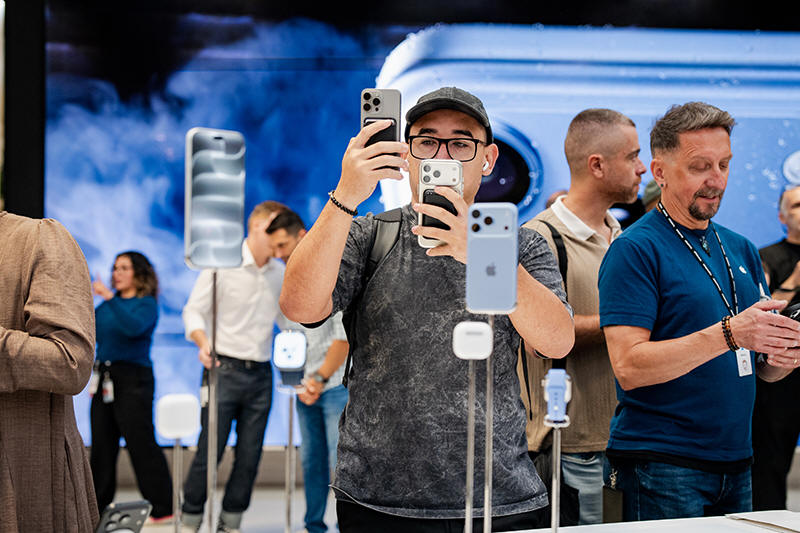
People shop at the Apple store on Fifth Avenue on the day of Apple's
launch of the iPhone 18 Pro, Friday, Sept. 18, 2026, in New York.
(AP Photo/Angelina Katsanis)
 Inflation for July was previously
reported at 3.7% but was revised lower to 3.4% by the government as
part of an update in how it measures price changes in several
categories, including investment management, computer software and
accessories, and legal services.
For example, the government previously put a heavy
weight on some computer accessories that have jumped in price
because of outsized demand from the AI buildout. The revisions
lowered that weight and as a result, the higher prices for some
computer equipment are not driving up this measure of inflation as
much.
Spending picks up
Despite elevated prices, Americans accelerated their spending last
month, the government said, with spending jumping 0.9% from July to
August, up from just 0.1% the previous month.
Some of that increase was likely fueled by wealthier Americans
cashing in their gains from higher stock prices, a recent report
from JPMorgan suggests. Other consumers may be taking on more debt
to support their spending.
After-tax incomes, adjusted for inflation, were unchanged on a
monthly basis in August, after rising 0.3% in July, the report said.
Healthy consumer spending could fuel a pickup in growth. In a
separate report Wednesday, the government said the economy expanded
at a 2.2% annual pace in the July-September quarter. Analysts expect
that to pick up to a 3% rate in the current quarter.
All contents © copyright 2026 Associated Press. All rights reserved
 |