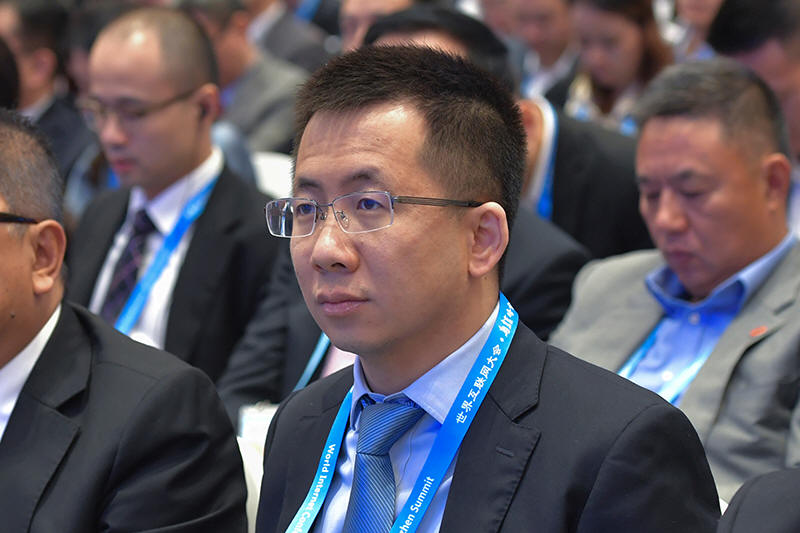
ByteDance founder Zhang Yiming reclaims top spot in China’s rich list,
thanks to his firm's AI push
[October 27, 2026]
BEIJING (AP) — ByteDance founder Zhang Yiming reclaimed the top spot on
a list of China’s richest people, driven by his company's push into
artificial intelligence.
The rankings released by The Hurun Research Institute on Tuesday
reflected that the country's high-tech sectors were rising but others
like consumer and real estate were under pressure.
The institute, which has published the list annually since 1999, found a
record 1,529 people with more than 5 billion yuan (about $750 million),
up 6.6% from last year.
The number of billionaires based on their net worth in U.S. dollars rose
to 1,176, up 155 people — 176 more than the U.S. That was slightly below
the 1,185 people in 2021.
Zhang topped the list with $100 billion, up 43%, “almost all of it on
the back of AI,” and the amount was a record high for China's richest
person, Rupert Hoogewerf, Hurun Report chairman, said in a statement.
Hoogewerf noted that ByteDance's Doubao is China's most used AI
assistant.
ByteDance is also the parent company of popular short-video platforms
Douyin and TikTok.
“AI is the biggest single wealth engine on this list: 160 Hurun rich
listers — 1 in 10 — now make their money from AI,” he said.

Bottled water magnate Zhong Shanshan fell to second place with $61
billion, down 23%, while Robin Zeng, chairman of CATL, the world’s
largest maker of batteries for electric vehicles, came third, Hurun
said.
Hurun cross-checked its information with entrepreneurs, regulators,
industry experts and others to compile the list, while acknowledging
limitations.
Chinese artificial intelligence startup DeepSeek founder Liang Wenfeng,
a new face on the list, ranked seventh. AI chipmaker Cambricon chair
Chen Tianshi was 10th.
[to top of second column] |
Zhang Yiming, founder of ByteDance attends the opening ceremony of
the 5th World Internet Conference in Wuzhen in east China's Zhejiang
province on Nov. 7, 2018. (Chinatopix Via AP)
 “This year’s gains were polarised —
entrepreneurs in AI, semiconductors and robotics surged ahead,
whilst those in consumer, real estate and traditional manufacturing
saw their wealth shrink — a two-speed economy,” Hoogewerf said.
China last week said its economy grew 4.5% in the July-September
quarter from a year ago, fueled by robust exports, moving closer to
meeting its official annual growth target for the year. For the
whole year, Chinese leaders have set a growth target of 4.5% to 5%,
down from last year’s 5% expansion.
While some industries were thriving thanks to government support for
technologies such as AI and electric vehicles, owners of small
businesses reported tough times as their customers cut back on
spending.
China’s domestic demand has been weighed down by a yearslong
downturn in its property market.
The Hurun list reflected that too.
Hoogewerf said Lei Jun, chairman of Chinese smart consumer
electronics maker Xiaomi, was this year’s “biggest faller,” with his
wealth halved to $25.1 billion. Consumer fortunes also fell across
the board, Hoogewerf said.
“Today, for the first time ever, not a single mainland property
developer remains in the Top 100 — the only property names left at
the top are the Hong Kong landlord families,” he said.
All contents © copyright 2026 Associated Press. All rights reserved |